
We recognize that your time is valuable—and there are lots of decisions to be made pertaining to your next project. When deciding where to buy decouplers and over-voltage protectors, it is important to consider more than the price listed on a sales sheet.
Our goal at Dairyland is to make a safer world by solving complex problems through innovative product design. From our beginnings solving stray voltage issues on dairy farms, to our global impact in the pipeline and high-power industries, we have over four decades of experience building rugged, reliable products that last.
We’ve created the following resource to aid you next time you need a decoupler or over-voltage protector for your project.
 |
How can I know if the decoupler I purchase will perform as specified?
We work tirelessly to deliver our customers the safest, most reliable products on the market. Integrity, safety, and reliability are part of everything we do at Dairyland—it’s in our DNA. We have full confidence that a properly specified product will perform as intended for years to come, because each one of them is thoroughly tested to confirm that they work as intended. But you don’t have to simply take our word for it—you can rely on our third-party certifications to independently confirm that our products do what we say they do.
Learn more about the importance of Third Party Certifications.
Do Dairyland products ever fail? What happens if they do?
Dairyland’s product failure rate is calculated at 0.01%. In fact, our products fail so rarely that in our 40+ years of business, only a handful of failures have been reported.*
Beyond that, our products are designed to be “fail-safe,” a standard that Dairyland set and introduced to the corrosion prevention industry. This means that during an over-voltage event, or in the very rare case of product failure, your device is designed to short to ground, safely passing any harmful current away from workers and/or equipment.
At the end of the day, when you invest in Dairyland products, you’ll receive premium decouplers and over-voltage protectors that are suited for extreme conditions, resulting in protection for your equipment and safety for your personnel.
*In the unlikely event that one of our products fails, please contact us (TechSupport@dairyland.com or 608-877-9900) to first discuss safely removing it from service. We will then work with you to determine the next steps in replacing the device.
What maintenance do your products require to keep my assets protected?
This one is easy—the answer is none! Dairyland decouplers and over-voltage protectors require no regular maintenance.
Our customers can rest assured that their Dairyland products meet all critical performance requirements, ensuring product performance, longevity, and safety, while also saving you valuable time—and money.
While not necessary, you may choose to test the functionality of your device. Here are some helpful resources to get you started: How To Test A Decoupler — Direct Test video, Indirect Testing article, & Direct Testing article.
What happens if I run into a problem or have questions when installing the product?
Call us (608-877-9900) or email us (TechSupport@dairyland.com). During our normal business hours, you will always be able to reach a real person within the first few rings.
Here at Dairyland, we pride ourselves on being a reliable resource and offer complete technical guidance on applications and products associated with isolation, grounding, over-voltage protection, and other related issues. Our team has an in-depth knowledge of Dairyland product offerings and industry solutions. We ensure your technical questions, application challenges, or product inquiries are thoroughly researched, and that you know how to proceed.
If you have a question or a problem you’re struggling to solve, give us a call. We’re here to help.
 |
Does Dairyland offer a product warranty?
Yes! Currently, Dairyland offers a 5-year warranty on all PCR, SSD, PCRH, OVP and OVP2 products, while our ISP and PCRX products both have a 2-year warranty from the date of invoice. For warranty details on Dairyland’s other product lines, please reach out to our team.
In Conclusion
The end result is clear to our customers around the world: we build rugged, reliable products that you can trust to perform. As we’ve done for the last 40 years, Dairyland will continue to pursue innovation, working efficiently to serve the needs of our customers. If a solution to your problem does not yet exist, we’ll work to find one.
Reconductoring is accelerating. Coordination must too. This article is a field-informed perspective on how reconductoring is changing the AC interference risk profile for buried pipelines. At Dairyland Electrical Industries, we work closely with both utility and pipeline sectors, which gives us a unique view into how these changes are playing out across shared corridors. Our goal is to elevate the conversation to help prevent future problems through early, cross sector coordination.
This article was originally published in World Pipelines, Volume 25, Number 11, November 2025.
Q U I C K L I N K S
What decoupler ratings do I need for AC Mitigation?
Can one decoupler be connected to multiple parallel insulated joints?
My valve site shorts the CP system. What do I do to solve this?
How can decoupler placement be allowed in series in a code covered electrical grounding conductor?
What are my options for separating station CP from the power company?
Can I connect a decoupler in the neutral connection to isolate my station from the power company to isolate my CP system?
What’s the difference between Dairyland products and spark gaps/lightning arresters?
Dairyland technical support personnel work tirelessly to ensure all your needs are met when it comes to products, applications, and general support. While we cannot exhaustively answer every question in this format, we want to put the knowledge back into your hands as often as possible. Therefore, below are some frequently asked technical questions that we receive, along with a corresponding answer and other helpful resources where applicable. Should your concern fall outside the scope of these simple answers, please do not hesitate to contact our tech support team via phone (608-877-9900) or email (TechSupport@dairyland.com).
What decoupler ratings do I need for AC Mitigation?
Every AC mitigation project is unique, so here are steps to determine what is needed: First, collect data from testing or studies done on the pipeline, such as AC fault current, AC steady -state current, and any classified hazardous areas along the route. The steady-state AC current rating selected should be adequate for the range of values that can occur daily or seasonally. Several Dairyland product families have a standard 45 A-rms rating, which is normally adequate. The PCR product family has an optional 80A-rms rating. The AC fault current rating will be determined from the mitigation design report, or in consultation with Dairyland staff. However, a common AC fault rating used is 5kArms (30 cycles, 50/60Hz). Lastly, determine the blocking voltage threshold required. To select the appropriate threshold, it will depend on the type of grounding material used. For copper grounding, select the -3V/+1V and the 2V/+2V for zinc grounding.
All product ratings are listed on the Dairyland website.
There are a number of accessories that can be helpful for an AC mitigation project, and are located here. Typical accessories are a pedestal to enclose the product and an isolation switch to safely disconnect a decoupler during surveys.
Additional Resources:
AC Mitigation Application Guide
“Safety Considerations In AC Mitigation Applications”
“How Do I Know Which Dairyland Product To Use?”
Can one decoupler be connected to multiple parallel insulated joints?
You can use one Dairyland decoupler if joints are closely spaced, for example within 2 feet. Lead lengths must be kept as short as possible for optimum over voltage protection for lightning. Longer leads adds inductance to the connection path, which produces large voltage drops for fast rising waveforms.
My valve site shorts the CP system. What do I do to solve this?
To effectively isolate a motor operated valve, a decoupler can be connected in series with the equipment grounding conductor and isolate one side of the metallic conduit to prevent a bypass. This decoupling point can be anywhere between the panel and the valve motor, noting hazardous classification within the station.
One method to address multipole shorts uses a polycarbonate enclosure to house the decoupler and create an open point in the conduit. Once all shorts to ground have been cleared, a Dairyland decoupler can be connected across the open points using a grounding hub on the incoming and outgoing conduit, placing it in series in the equipment grounding conductor, and the sheath or bonding conductor of any communications cable. Connect the positive terminal of a decoupler towards the electrical panel side or the non-cathodically protected side. The negative terminal should be connected to the cathodically protected side or the motor operated valve.
How can decoupler placement be allowed in series in a code covered electrical grounding conductor?
In the US National Electrical Code, NFPA 70, section 250.4(A)(5) regarding an effective ground-fault current path, requires: “Electrical equipment and wiring and other electrically conductive materials likely to become energized shall be installed in a manner that creates a permanent, low-impedance circuit facilitating the operation of the overcurrent device or ground detector for high-impedance grounded systems. It shall be capable of safely carrying the maximum ground fault current likely to be imposed on it from any point on the wiring system where a ground fault may occur to the electrical supply source.”
The key is that Dairyland decouplers were evaluated, tested, and certified by Underwriters Laboratory (UL) as meeting the effective ground-fault current path requirements, as the devices were permanent, low impedance, fault-rated devices that fail safe, meaning fail shorted. Thus, they do not compromise the grounding system whether they are functional or failed and are therefore allowed in the ground fault current path.
Once the requirements of the ground fault current path are met, a listed decoupling device can be used as section 250.6 (E) states: “Where isolation of objectionable DC ground currents from cathodic protection systems is required, a listed AC coupling/DC isolating device shall be permitted in the equipment grounding path to provide an effective return path for AC ground-fault current while blocking DC current.”
The Canadian Electrical Code, CSA C22.1 in section 10-500 defines effective grounding, similar to the NEC, and in section 10-806(1) allows certified devices to be installed in grounding conductors.
Dairyland decouplers meet these requirements and have been used in equipment grounding conductors since 1996.
Additional Resource: “The Role of DC Decouplers with Cathodic Protection Systems”
What are my options for separating station CP from the power company?
Grounded electrical systems can bond structures with CP to the local grounding system and ultimately to the power company grounding system due to the two grounding systems being connected at the transformer. A complicated facility receiving power can have multiple possible approaches to solving shorted CP systems.
- Decouple every bond to local facility grounding (can be extremely challenging due to so many ground connections, valves, electrical equipment, etc.)
- Decouple the facility and utility grounding systems at the disconnect panel.
- Decouple the facility and utility grounding systems at the utility transformer.
Decoupling at either the disconnect panel or at the utility transformer accomplishes the same CP isolation if done correctly. If performed at the disconnect panel, your electrician can accomplish this in conjunction with the CP staff, but every station is likely built differently, and each facility will need to be examined for the source of the short. The typical situation is that the incoming neutral, which is already bonded to the power utility, is then grounded in the disconnect panel, and we have already established that your CP system is tied to the facility grounding system. Usually, the decoupler is installed in series with the electrical grounding conductor right after neutral is bonded to the ground bus at the panel to accomplish CP isolation up to that point within the station.
An alternative is to install the decoupler at the transformer between primary to secondary neutral bond. The decoupler is installed in series with this primary to secondary neutral bond and removing one of the tank or case bonding straps to prevent a bypass. This is a highly standard location that can uniformly be addressed, but it does involve an outside party – the power company.
Additional Resources:
Decoupling From Utility Grounding Systems Application Guide
DC Decoupling from Utility Grounding Systems White Paper
Can I connect a decoupler in the neutral connection to isolate my station from the power company to isolate my CP system?
No. A decoupler cannot be placed in series with the neutral connection because it is a load carrying conductor and a decoupler is not approved to be installed there. Decouplers are certified and approved to be installed in series with the electrical grounding conductor, which is only meant to carry fault current and not load current.
Dairyland decouplers meet the standards per UL and C-UL for Effective Ground Fault Current Path per the following:
- NFPA 70 (US National Electric Code – NEC): Article 250.4(A)(5)
- CSA C22.1 (Canadian Electric Code, Part I): 10-002
What’s the difference between Dairyland products and spark gaps/lightning arresters?
For a spark gap or lightning arrester to trigger, voltage must build to a very high value, typically hundreds of volts. Dairyland products have a very low and safe voltage threshold. This provides much better protection for personnel and equipment. Spark gaps or arresters generally are not rated for any notable value of AC fault current and usually fail during AC fault events. Dairyland products have high AC fault current capability ranging from 1.2 KA to 15KA and can go even higher if needed by using multiple devices in parallel, but that is another conversation.
Additional Resource: Over-Voltage Protection: The Critical Differences Between Spark Gaps and DC Decouplers White Paper
Dairyland is committed to providing reliable information on products, applications, and services. Don’t see your question answered above? Our tech support team is available during our normal business hours and can be reached via phone (608-877-9900) or email (TechSupport@dairyland.com).
Another helpful resource to reference is our recently published article: “Top-10 Questions About Decouplers”
Q U I C K L I N K S
What is the difference between a Decoupler and an Over-Voltage Protector?
When do I need a Dairyland Decoupler?
How do I test a decoupler to know if it is working?
What is the difference between a PCR and an SSD?
Which products are rated for hazardous locations?
How do Dairyland decouplers compare to competing technologies?
What polarity should be used to connect a decoupler?
What is a “voltage threshold”? And how do I know that my decoupler has the correct voltage threshold for my application?
What should the spacing between decouplers be for AC Mitigation applications?
How do I spec a product for an insulated joint?
Dairyland technical support personnel work tirelessly to ensure all your needs are met when it comes to products, applications, and general support. Below, we have compiled a list of frequently asked questions regarding Dairyland decouplers and their various applications. This resource will also guide you to related articles in our Knowledge Base for further reading.
Dairyland decouplers keep workers and valuable assets safe from AC faults, lightning, and induced AC voltage, all while optimizing cathodic protection systems. We hold ourselves to a very high Always Rugged standard to ensure Dairyland products meet all critical performance requirements, provide fail-safe operation, and address hazardous location needs to guarantee longevity and safety.
Our tech support team is available during our normal business hours and can be reached via phone (608-877-9900) or email (TechSupport@dairyland.com).
What is the difference between a Decoupler and an Over-Voltage Protector?
Decouplers (PCR, PCRH, PCRX, and SSD) are commonly used to isolate cathodically protected structures from other equipment grounding systems, enhancing the cathodic protection system’s performance. They also perform a function of safely grounding induced AC, fault current and lightning. Over-Voltage Protectors (OVP and OVP2) provide the same DC isolation and protection from fault current and lightning but are not designed to address induced AC current.
Therefore, the first question to ask when selecting a Dairyland product family is whether there is (now or could be in the future) any induced AC voltage present. Induced AC commonly occurs on structures near overhead powerlines. If the answer is yes, or if you are unsure, you should select a decoupler to address any present or future issues with induced AC.
Additional Resources: “What Are Solid-state Decouplers and How Are They Used?” and “Over-Voltage Protection: The Critical Differences Between Spark Gaps and DC Decouplers.”
When do I need a Dairyland Decoupler?
The short answer is that a decoupler can be used for a variety of purposes and applications. Most frequently, they are installed when it is desirable to isolate DC current (CP current) while simultaneously grounding AC fault current and lightning current.
DC Decouplers are commonly used for applications such as:
- Isolating electric equipment from grounding systems, while still meeting electrical codes for safety
- Insulated joint over-voltage protection
- Connecting a cathodically protected pipeline to an AC mitigation system
- Tying a cathodically protected pipeline to a gradient control mat
- Grounding of power cable sheaths/casings to substation grounding systems
- Separating a facility with CP from power utility grounding systems beyond the transformer
Additional Resource: “AC Mitigation and Cathodic Protection: How Decouplers Make a Difference”
How do I test a decoupler to know if it is working?
A simple, indirect way to test a decoupler is through a standard pipe-to-soil reading. If your test shows acceptable CP levels, then the device is functioning properly. Decouplers are designed to block DC current, therefore acceptable cathodic protection readings reflect an operational Dairyland device.
For more detailed testing, please refer to our website’s tech articles: “Indirect Testing” & “Direct Testing.”
What is the difference between a PCR and an SSD?
PCRs and SSDs provide the same functions, and the main differences are in the ratings, package size, and cost.
- PCR AC fault ratings: 3.7 kA, 5 kA, 10 kA, and 15 kA.
- SSD AC fault ratings: 1.2 kA, 2.0 kA, 3.7 kA, and 5 kA.
Dairyland’s SSD was created as a more compact unit some years after the PCR. They share AC fault current capabilities, but the SSD was developed primarily for handling lower AC fault conditions. These units have identical hazardous location ratings, suitable for Division 2 and Zone 2 locations. PCR enclosures have either a NEMA 4X (IP66) rating or an optional NEMA 6P rating. SSDs enclosures have an IP68 rating (similar to NEMA 6P) that is rated for submersion up to two meters.
Additional Resource: “What if Decouplers Didn’t Exist?”
Which products are rated for hazardous locations?
PCR, PCRX, SSD, and OVP2 are all rated for use in areas with a Class I, Division 2 or Zone 2 classification. Class I, Division/Zone 2 units are suitable for most common applications, and these are Dairyland’s most frequently used devices.
PCRH and OVP are rated for use in areas with a Class I, Division 1 or Zone 1 classification. These units can still be used in any application with lesser requirements, such as Class 1, Division/Zone 2 installations.
Additional Resource: “Understanding Hazardous Locations”
How do Dairyland decouplers compare to competing technologies?
As a corrosion professional, your ideal applications keep your personnel safe and your system running efficiently. As an installer, you want tech that is easy to install and is maintenance-free. No matter your position, we know you are looking for solutions that address your various needs.
There are several devices on the market that attempt to resolve one or more of these concerns. However, maintenance needs, limited lifespans, and safety concerns all come attached to their price tags. Dairyland decouplers offer a solution to all your CP isolation and over-voltage protection needs. Because of their proven reliability, Dairyland’s solid-state decouplers are the smart choice over other DC isolation devices. Long-term, you will save maintenance labor and material costs by installing Dairyland devices. You will also mitigate risk to your equipment and personnel.
In addition to manufacturing industry-leading products, we pride ourselves on providing reliable technical support. Contact us any time.
Additional Resources: “Dairyland Decouplers vs. Competing Technologies” and “Dairyland OVP Devices vs. Competing Technologies”
What polarity should be used to connect a decoupler?
In general, the negative terminal connects to the more negative structure, and vice versa. Therefore, generally the + (Positive) goes to the ground connection and – (Negative) goes to the structure with CP. Across an insulated joint, where one side has CP and the other is grounded, connect negative to the protected side, and positive to ground. For an insulated joint with CP on both sides, select a symmetrical device, which is typically -2V/+2V, and then polarity is irrelevant.
Additional Resource: “Polarity Matters – Labels On Your Decoupler”
What is a “voltage threshold”? And how do I know that my decoupler has the correct voltage threshold for my application?
A decoupler’s voltage threshold is the voltage range supported between its terminals before direct current conduction. This is different from the industry measurement of “structure to soil” voltage, which is measured to a reference cell. The key value to measure is the difference between the two points a decoupler would be connected (pipe and ground) and compare that value to the negative threshold value.
For example, if a pipe-to-soil reading of -2V were obtained, and the reading from a grounding system to the same reference cell was -0.3V, then the decoupler connected between this pipe and grounding system would be exposed to -1.7V, which is the difference between the two readings. This assumes that the standard practice was used with decoupler negative terminal connected to the more negative structure (the pipeline) and positive to the grounding system. If the decoupler had a -3/+1V threshold, we compare the -1.7V reading to -3V value and find it acceptably below that threshold. Note that a -2/+2V threshold would have worked fine in this example as well. If the measured value were above the threshold, then the decoupler would be in full conduction and not block CP current. Standard Dairyland decoupler thresholds cover most pipeline situations.
A specific case that should be examined is where proximity to a rectifier results in elevated pipeline voltage that could approach the decoupler threshold and in that case one might consider the 3, 4, or 6 volt negative threshold to address this.
Additional Resources: “Understanding Voltage Threshold Ratings” & “Voltage Threshold Simulator”
What should the spacing between decouplers be for AC Mitigation applications?
Studies and testing should be conducted to accurately place Dairyland units for optimum AC mitigation and over voltage protection. Mitigation consultants are available to perform software modeling for optimal AC mitigation. Dairyland does not perform AC mitigation planning or studies. However, when we talk to mitigation designers regarding spacing, we have found that they often space these every ½ mile, presuming no pipeline or powerline changes in between that would cause a voltage spike. For example, whenever the pipeline or powerline change position relative to each other there will be a change in the magnetic field and a resulting voltage rise there, and a decoupler will be located near that change. Don’t forget other pipeline features such as insulated joints in the right-of-way that should be protected with a decoupler, as well as casings. AC mitigation design is a specialized field, and there are many factors that affect a design.
Additional Resource: “Decoupler Spacing for AC Mitigation Projects”
How do I spec a product for an insulated joint?
First, determine whether steady-state AC is present on either side of the joint.
- If AC is present, use PCR, PCRH, PCRX, or SSD.
- If AC is not present, use OVP or OVP2.
It is safer to assume that AC is present or could be in the future. Situations where AC is not likely are limited to airport fueling systems, and insulated joints interior to large facilities. Use caution, as AC induction on pipelines may require decouplers (SSD, PCR, PCRH) applied to a series set of insulated joints to mitigate AC to a station grounding system, only then allowing other insulated joints within a facility to utilize other Dairyland devices such as the OVP or OVP2. Due to complexity of stations, it is best to consult Dairyland staff for guidance.
Second, if the joint is in a Class I, Division 2 location, use models PCR, SSD, or OVP2 (most locations are Div 2/Zone 2). If the joint is in a Class I, Division 1 location, only use models PCRH or OVP.
Third, once the correct decoupler or over-voltage device is selected, choose the correct voltage threshold based on data (DC levels) collected from the pipeline. Typically, the standard ratings of -3/+1 or -2/+2 V are adequate. The -2/+2 (“symmetrical”) rating can be used where CP is present on both sides of a joint, or for CP present on one side of the joint only. The -3/+1 is generally only used where there is CP on one side of the joint and the other side is grounded. Remember to connect the negative terminal to the more negative, or cathodically protected, side.
Additional Resource: “Over-Voltage Protection: The Critical Differences Between Spark Gaps and DC Decouplers”
Bonus Additional Resources Regarding the MEGA Rule:
- “PHMSA Mega Rule Explained and How Dairyland Can Help You“
- “Understanding the Mega Rule: Accurate Close Interval Surveys“
- “Understanding the Mega Rule: Interference Mitigation“
- “Understanding the Mega Rule: RMV Installation Best Practices“
Should you have an eleventh or twelfth question, do not hesitate to contact our team at TechSupport@dairyland.com.
The Dairyland SSD was developed in 2005 as an alternative to the PCR. Both decouplers provide the same functions, but have a few key differences as well—most notably the ratings, package size, and cost. In the time since its release, the SSD has become one of our most popular decouplers, as it can be applied to a wide range of applications.
Dairyland technical experts and customer support personnel are often asked: What is the difference between “-R” and “non-R” SSDs? The following video graphically illustrates the primary differences, while also highlighting the specific applications for which they are best suited.
We are dedicated to understanding our customers’ needs and providing reliable products and service. If a solution to your problem does not yet exist, we’ll work to find one. Connect with us or call 608-877-9900.
In the world of oil and gas pipelines, decouplers play a critical role enabling safe and sustainable pipeline operation. In fact, decouplers perform an essential role in corrosion mitigation – ensuring safety, regulatory compliance, preventing costly damage and downtime for pipelines and related assets. They also provide shock protection to personnel and pipeline assets from safety hazards, caused by power line faults, electrical failure of equipment, and lightning strikes. The decoupler, however, is often misunderstood and its application under appreciated. Here we demystify decouplers and explain the vital role they play.
This article was originally published in World Pipelines, Volume 24, Number 11, November 2024.
This is the second article in our series designed to provide clarity amid the many new complexities surrounding the Mega Rule (read the first in the series). Corrosion control and repair criteria are central to Part 3 of the Mega Rule and here we focus on challenges around interference mitigation. Throughout this series, we also present solutions designed to help informed decision making and compliance.
The Mega Rule
To recap, the Mega Rule builds on and updates existing legislation designed to reinforce a risk management approach to the safety of natural gas transmission pipelines, natural gas distribution pipelines, and hazardous liquid transmission pipelines. Its third and final part became effective in February of 2023 with a compliance deadline of February 2024. It clarifies integrity management regulations from corrosion control requirements and repair criteria to post extreme weather inspection and applies to onshore gas pipeline infrastructure spanning HCA, and non-HCA.
The Mega Rule updates are challenging but Dairyland’s expertise and technologies are proven to mitigate interference, helping to deliver compliance, ensure safety and create competitive edge.

Background
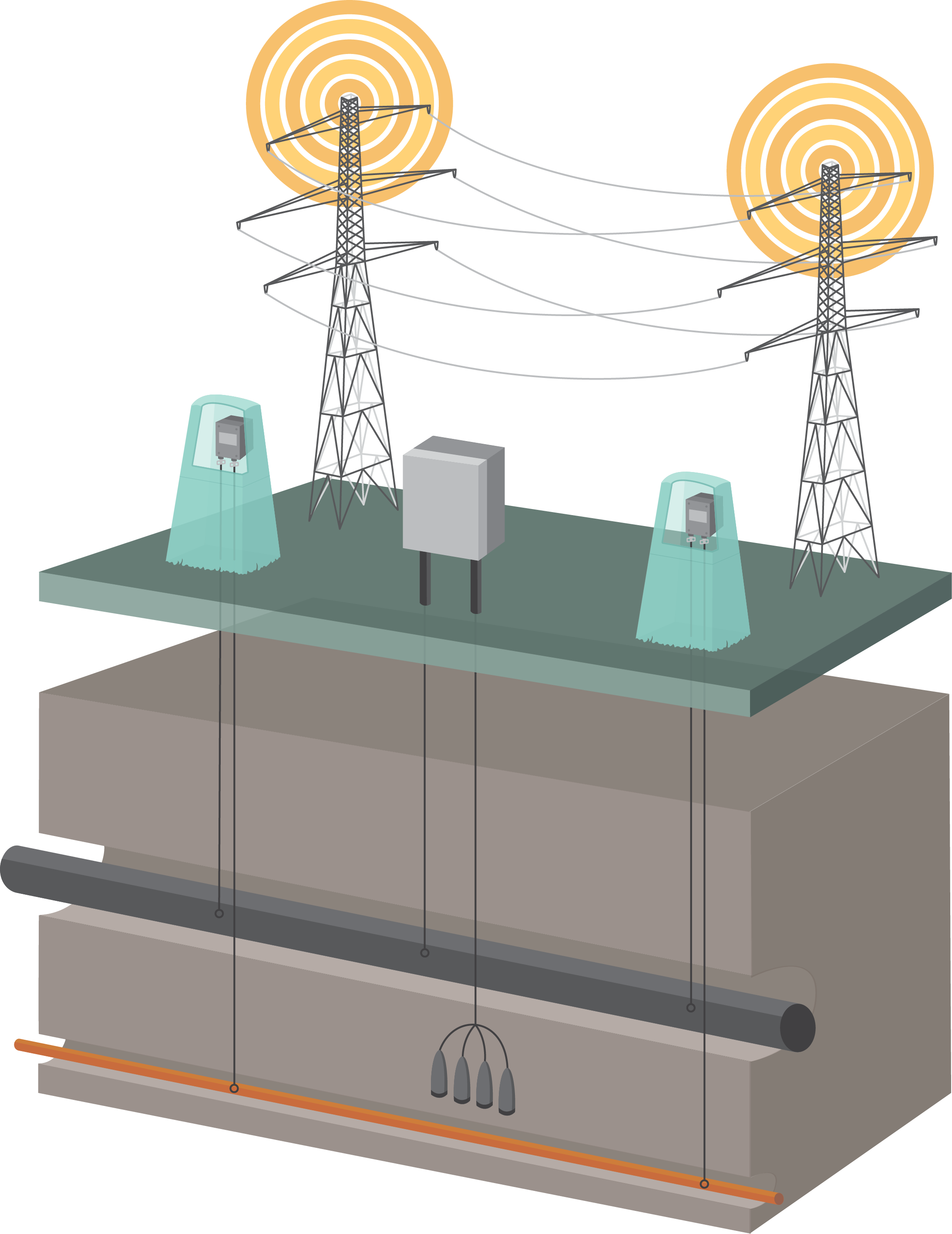
For a range of logistical, land access and environmental purposes, it is a global norm for pipelines to share Right-of-Way (ROW) with high-voltage power lines creating a network of utility corridors. In these multi-purpose routes that often span long distances, AC corrosion risk is increased due to undesirable AC interference while also raising shock hazard risk to personnel who come in contact with the pipeline or appurtenances.
Challenge #2: Interference Mitigation
To understand the extent of corrosion and pipeline integrity, interference surveys are essential. Pipeline infrastructure and associated equipment have voltage limits and mitigative measures are required to reduce corrosion risk, lessen the risk to personnel, prevent costly damage and downtime.
To ensure compliance with the new regulations, interference surveys are undertaken when periodic monitoring indicates an increase in stray current, or new stray current sources are introduced. Sources of stray current can include co-located pipelines, structures, or high voltage alternating current (HVAC) or DC power lines (including from additional generation), a voltage up-rating, additional lines, new or enlarged power substations, new pipelines, or other structures. If the interference current is greater than or equal to 100 amps per meter squared a remedial action plan must be developed and implemented within a rule-stipulated time frame.
The risk of interference is heightened through the transferal of electrical energy onto a pipeline in multiple ways. Apart from the expected interference on multi-purpose routes, faults beyond the control of the pipeline operator, including lightning strikes, can take their toll on asset integrity. Furthermore, damage to overhead transmission systems from extreme weather or technical failures can increase the risk of line-to-ground damage. All these risks, and many more besides, must be mitigated against.
Solution #2: Interference Mitigation
Engineered interference mitigation systems can reduce AC voltages to an acceptable level, significantly reducing cost implications and improving safety over the operational lifespan of pipeline infrastructure. Dairyland products are proven, critical components of successful AC interference mitigation systems globally. Our decouplers such as the SSD, PCR, and PCRX, provide an effective grounding path that mitigates induced AC, while simultaneously maintaining DC isolation. Indeed, effectively utilizing decouplers in AC mitigation applications will help to minimize voltage differences to safe levels for both personnel and equipment when grounding is required to address safety and equipment concerns and isolation is required to maintain an effective cathodic protection (CP) system. Dairyland decouplers are appropriately rated to manage over-voltage conditions while simultaneously providing CP system isolation, protecting the integrity of your CP, maintaining a low impedance path to earth for AC and lightning, protecting your personnel and equipment.
With the Mega Rule impacting approximately 300,000 miles of existing onshore natural gas pipeline, and almost 20,000 miles of planned pipeline in the US, extending the life of these assets and building them in compliance with the regulations will require innovative technology and solutions.
Dairyland is here to help you make decisions on how our solutions can be applied to achieve Mega Rule compliance. We pride ourselves on being a reliable resource for complete technical guidance and our technical support staff is ready to support you in a variety of ways – even if you don’t end up needing our products.
Mega Rule Article 1: Accurate Close Interval Surveys
Mega Rule Article 3: RMV Installation Best Practices
Wherever high voltage AC (HVAC) power lines or AC railway lines are in proximity with steel pipelines, there are risks and challenges associated with AC interference on the pipeline (1). However, remediation efforts are often neglected for the sake of short-term cost savings. In the long run, ignoring AC interference can result in devastating results associated with accelerated pipeline corrosion or rupture and/or personnel safety hazards. At a minimum, pipeline operators need to understand the degree of AC interference on their pipelines in terms of AC voltage potentials and AC current density and have mitigation and monitoring plans in place where these measures exceed industry criteria.
For decades, as pipeline operators have been made more aware of the potential hazards of AC interference, AC mitigation systems have become increasingly common worldwide. As critical components of AC mitigation systems, Dairyland DC decouplers allow cathodic protection (CP) systems to work effectively in concert with AC mitigation systems by isolating CP systems from earthing systems while maintaining a low impedance path to earth for AC and lightning.
This article was originally published for AMPP Italy, 2024.
Though not common, sometimes, an application may require a rating higher than what is available as a single decoupler. For example, an AC mitigation project may call for decouplers rated for AC fault currents up to 20kArms. But the highest fault current rating in a single Dairyland decoupler is 15kArms. Similarly, a pipeline may have very high AC interference such that the continuous AC current through a single decoupler may exceed the standard steady-state rating of 45Arms. And occasionally, pipelines with higher CP potentials or those exposed to DC interference may require decouplers with higher threshold voltages to prevent them from going into conduction unnecessarily. Dairyland offers threshold voltages up to -6/+1V on some PCR models. But in some rare cases, even higher thresholds may be needed.
In such applications, multiple decouplers may be combined to create a wide range of effective ratings for AC fault current, steady-state AC current, and threshold voltage that otherwise may have been outside the application range of standard decouplers.
Increase Effective AC Steady-State and Fault Current Ratings by Connecting Multiple Decouplers in Parallel
The effective rating for both AC fault current and steady-state AC current increases in proportion with the number of decouplers connected in parallel. For example, the combination of two standard PCR-15kA devices, when connected in parallel in close proximity (i.e., connecting leads < 1m) as shown in Figure 1, has an effective AC fault current rating of 30kArms @ 30 cycles (50/60 Hz) and an effective steady-state AC current rating of 90 Arms. The threshold voltage of the combination remains unchanged from that of each individual device.
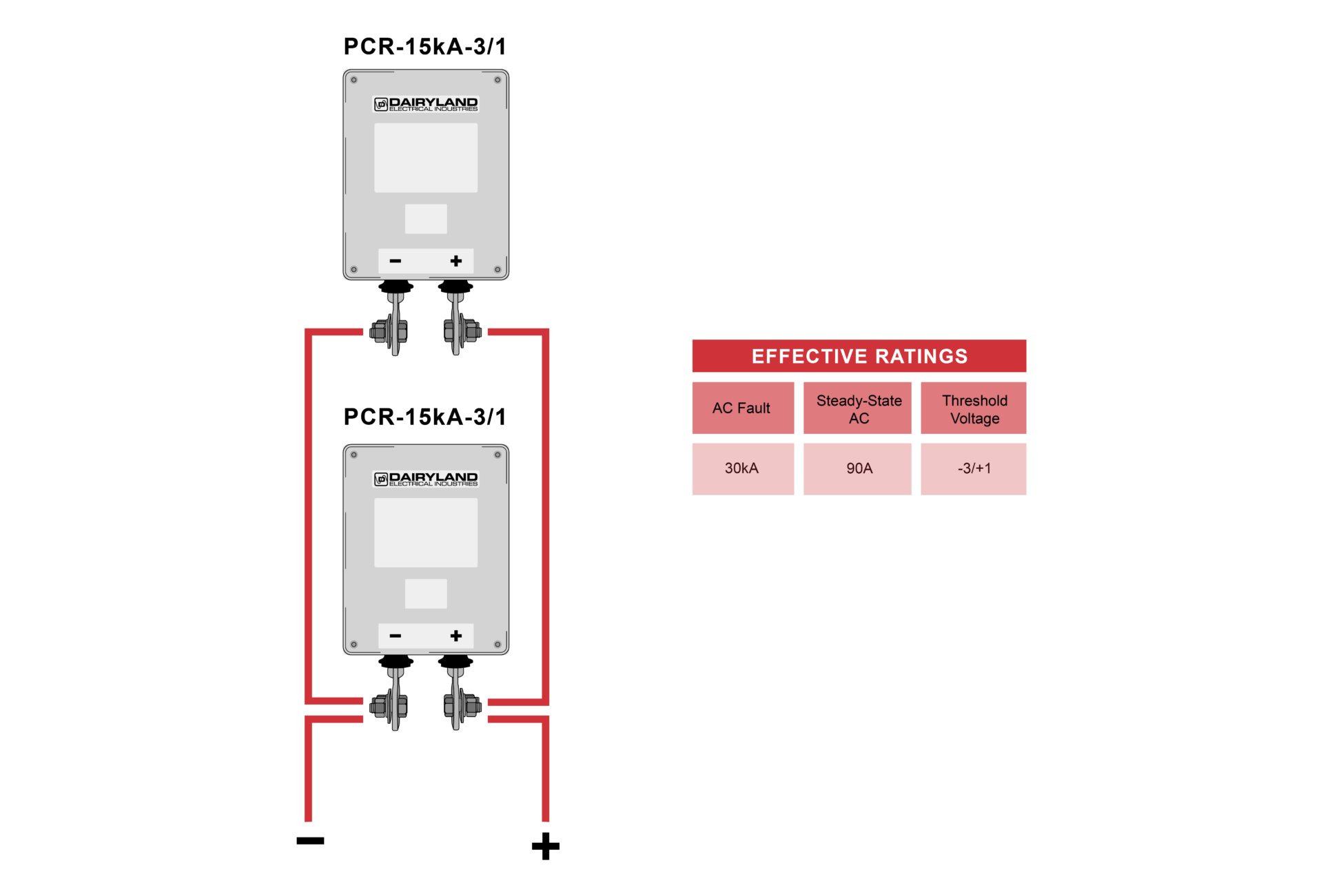
Figure 1. Increasing Effective Current Ratings by Connecting Devices in Parallel
CAUTIONPCRX decouplers should never be combined in parallel
|
When installed in this way, both the fault rating and the threshold voltage of each device must be equal to ensure that they each conduct in unison. Note that the total AC impedance of the parallel decoupler combination is reduced according to Equation 1. For example, the impedance of a single SSD or standard PCR at 60 Hz is 0.010 Ω. When two SSDs are combined in parallel, the equivalent impedance becomes 0.005 Ω at 60 Hz.

Increase Effective Threshold Voltage by Connecting Multiple Decouplers in Series
The effective threshold voltage of the series combination of decouplers is additive with the number of individual decouplers. For example, the combination of two PCRs, each with a threshold voltage of -3/+1V, when connected in series in close proximity (i.e., connecting leads < 1m) as shown in Figure 2, has an effective threshold voltage of -6/+2.
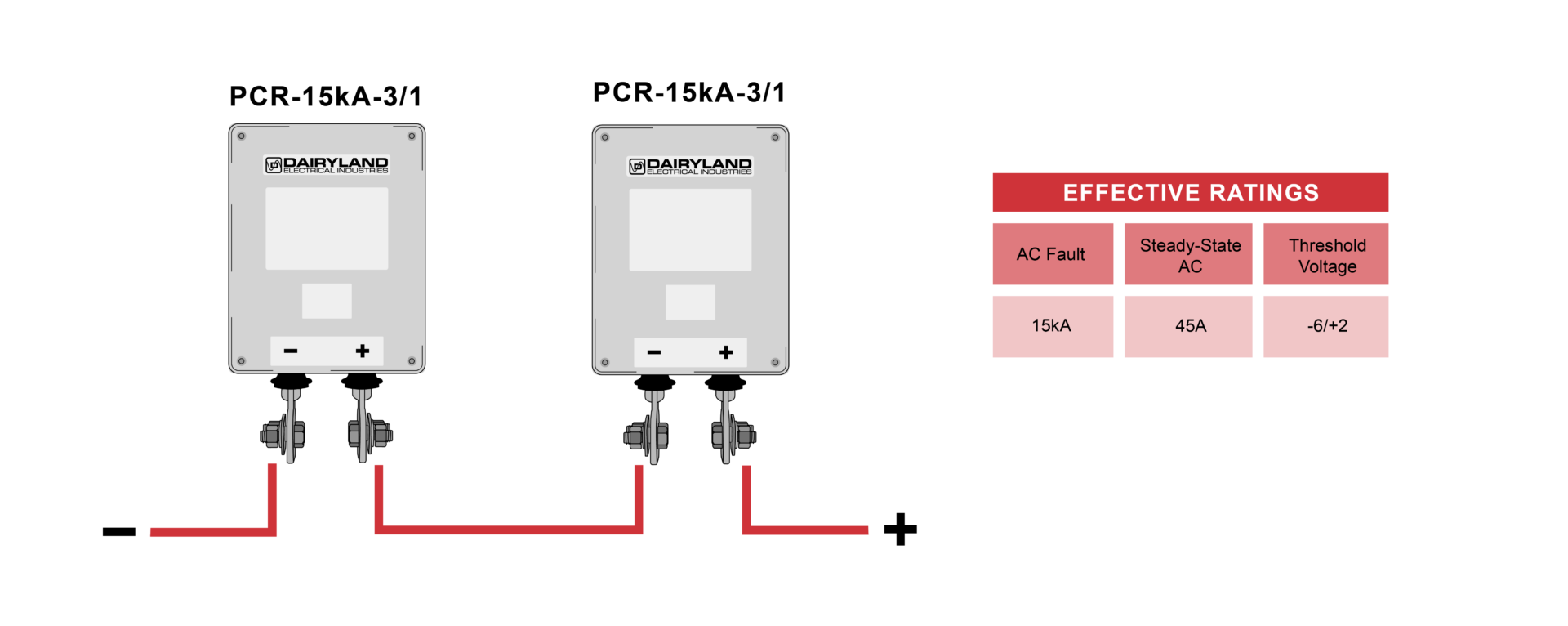
Figure 2. The effective threshold voltage of decouplers combined in series is the sum of the individual device threshold voltages
Note that the effective AC steady-state current rating and AC fault rating of the series combination will be equal to that of the lowest rated device in series.
Be aware that the total AC impedance is additive with the number of decouplers in series. For example, two SSDs or standard PCRs, each having AC impedance of 0.010 Ω at 60 Hz, will have a total impedance of 0.020 Ω at 60 Hz.
Other Ratings Created by Different Decoupler Arrangements
Though their use may be limited, note that several other interesting effective threshold voltages can be created by reversing the polarity on one of the decouplers and connecting them in either anti-series or anti-parallel as shown in the table below.

If you have any questions about combining multiple decouplers or Over-Voltage Protectors, contact Dairyland at techsupport@dairyland.com.
What is a DCVG Survey?
A direct current voltage gradient (DCVG) survey is a technique used to evaluate the effectiveness of corrosion protection systems on buried structures. This technique is used to analyze the coating condition and locate any coating “holidays” or coating defects on the buried pipeline.
In a DCVG survey, direct current (DC) is applied to the pipeline by using the pipeline’s impressed current rectifier or a portable power supply, and the voltage gradient is measured at intervals above the pipeline at the ground surface. The voltage gradient is measured by using two calibrated reference electrodes that are spaced a set distance apart. This measurement is the soil-to-soil potential difference and not the pipe-to-soil potential. Since most of the DC current will flow from the current source to a coating holiday, a voltage gradient will be present at a coating holiday and will appear as either current pick up or discharge.
Possible DCVG Survey Concerns with Standard Decouplers
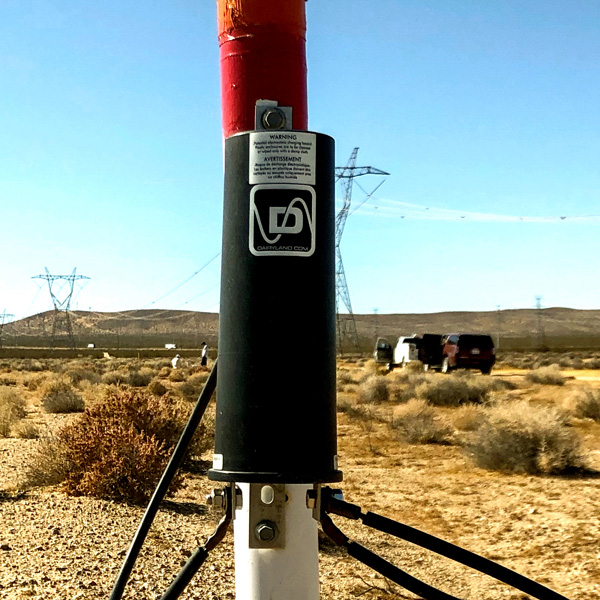
Dairyland SSD
During a DCVG survey, the impressed current rectifier or portable DC power supply is interrupted at a certain On/Off cycle similar to a Close Interval Survey (CIS). During the On cycle, the voltage gradient measured will be highest at the coating holiday. Conversely, during the Off cycle, the voltage gradient measured should not be present at that coating holiday as there is no DC current flow from the rectifier.
However, when standard decouplers (SSD, PCR, or PCRH) are installed nearby, this can affect the DCVG survey measurements and/or trigger a false reading with regards to coating holidays. This is due to the detection of a voltage gradient near standard decouplers and their connection to the grounding system. This may lead technicians to interpret this potential measurement as a large coating holiday and/or cause the operator to sway from the pipeline and follow the grounding system as it will be detected.
This voltage gradient is caused by the inherent capacitance of standard decouplers. These decouplers have a capacitor that is used to mitigate steady-state AC current from nearby HVAC lines. The capacitor holds a certain DC charge that looks like an uninterrupted DC source during the Off cycle of the survey. During the Off cycle, as the capacitor is discharged, it may still provide current to sustain the voltage gradient near the decoupler location and thus, may lead to an erroneous determination of a coating holiday.
The solution to this has been to temporarily disconnect the standard decouplers within the vicinity of the DCVG survey to remove this influence. However, this negatively affects the time to complete the survey and may increase the cost as well.
Solution For Faster DCVG Surveys
PCRX is Dairyland’s latest in solid-state decoupling technology. PCRX was introduced to the industry to virtually eliminate the capacitance issue found with standard decouplers. PCRX provides two main advantages over standard decouplers.
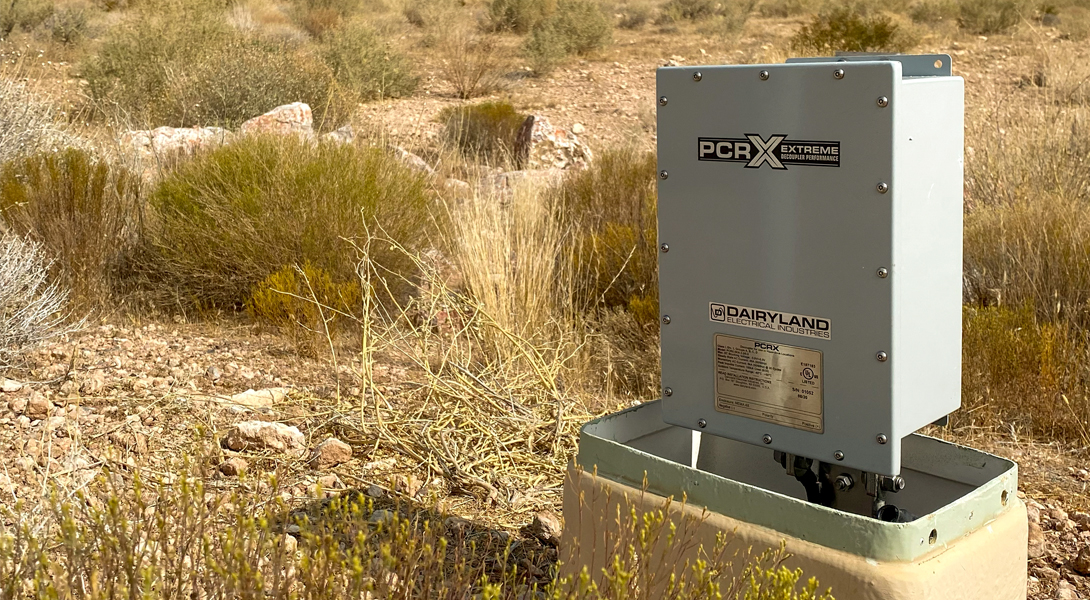
Firstly, it virtually eliminates the capacitive effects during the Off cycle, eliminating the voltage gradient and therefore, the possibility of an erroneous determination of a coating holiday. Secondly, there’s no need to disconnect the decoupler from the pipeline during the survey, always maintaining the connection to the mitigation system and keeping the pipeline grounded for over-voltage conditions. These benefits lead to safer and more efficient DCVG surveys.
We have a trained business development team ready to discuss your applications and product needs. Feel free to reach out to us to ask questions or consult on your needs – we are here to help!
Decouplers are a vital element of most CP systems, providing numerous benefits to their users including blocking the flow of DC current to ground, AC voltage mitigation, over-voltage protection, safety grounding and AC fault current and lightning impulse protection. For 40 years, Dairyland has been providing the industry with leading decoupler technology in the form of the globally used SSD and PCR.
In some circumstances, site conditions and other factors paired with traditional decouplers contribute a capacitive effect to interrupted surveys, which can lead to inaccurate readings and frustration for users. Dairyland has previously discussed solutions to these challenges, including adjustments to the instant-off cycle times or disconnection of the decouplers using the Isolation Switch. The PCRX introduces active capacitance compensation that addresses these challenges without requiring disconnection or other time-consuming methods of remediation.
How Can I Know if the PCRX Will Improve My Surveys?
The capacitance effect that can lead to inaccurate interrupted surveys can be challenging to predict as it involves a variety of factors and site conditions. While Dairyland has done extensive research using internal and external experts, there is not an easy one-size-fits-all answer. However, general guidance in the selection of the decoupler is given below.
Evaluate Site Conditions
Notably, the only decoupler featuring active capacitance compensation during interrupted surveys is the PCRX. When evaluating what product to choose, an expected question arises: How do I know if my site will have this capacitive effect on my interrupted surveys? Due to the wide variety of factors, it is not possible to predict with certainty which sites will experience this issue. However, site conditions play a significant role in whether users will experience the capacitive effect during interrupted surveys with traditional decouplers.
While this cannot be used as a definitive tool, the following chart shows trends indicating the likelihood of this effect occurring based on site conditions. The PCRX will be generally suitable for any site condition. Traditional decouplers like the SSD or PCR are less likely to have a significant effect on interrupted surveys in site conditions indicated on the left of this chart.

Definitive Site Testing

Dairyland’s CAD-270
While an analysis of the product ratings and site conditions is likely adequate for most users, some users may want a more definitive answer to whether their site would exhibit capacitive effects when using traditional decouplers. Dairyland has developed an in-depth process for site testing. See the article ‘Testing and Evaluation of Decoupler Capactive Effects and Utlization of the Dairyland Model PCRX’ for a thorough explanation of this process. By utilizing existing standard decouplers or the new CAD-270 Capacitive Assessment Device, users can gather site data for this determination. A general outline of this site evaluation method is below.

Compare Product Ratings
Dairyland’s range of decouplers all perform the same core functions of providing simultaneous DC isolation and AC grounding. However, there are differences in product ratings and features that should be evaluated when choosing a decoupler for your site conditions. Utilize the chart below to compare decoupler models and determine the most suitable product for your needs.
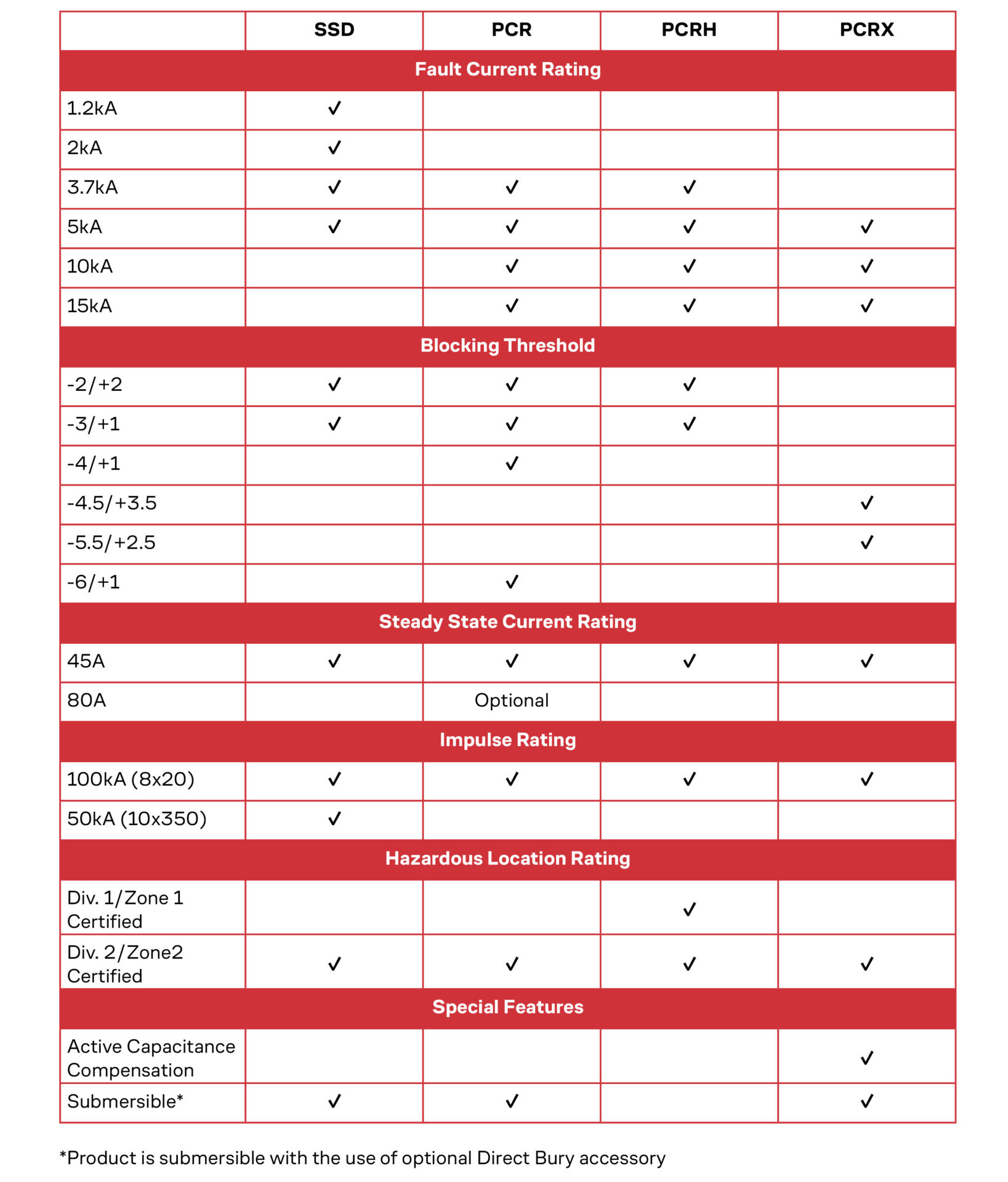
If you are interested in learning more about the PCRX’s features and operating characteristics, please review our PCRX FAQs or contact Dairyland technical support for more information on if the PCRX is right for you.