
What does it mean to attend to the whole person?
It is human to feel the heaviness, fear, uncertainty and stress swirling throughout our world. In recent weeks we have heard a lot about taking critical actions to keep ourselves and others healthy amid global pandemic. While their importance can’t be emphasized enough, at Dairyland we have been considering how we can further meet the needs of the whole person.
We invite you to join us as we care for both ourselves and others right now. Our partners, spouses, kids, extended family members, friends, coworkers, neighbors, and even the lady in front of us at the grocery store need it. We need it too. It takes compassion, intentionality, and generosity, and this is what it means to live engaged in the mundane moments and stressful times of crisis.
Toward that end, we put together a list of prompts and possibilities to pursue a different approach to this season. You might walk away with 1 new practice or incorporate 5; take what is helpful. It might even spark a different idea that is life-giving for you.
May these become on-roads to thriving and living engaged even now.
CUT
Slash excessive inputs of news and social media. Cut what is unhelpful and fuels stress, discontent, or anger. Enjoy the peace and mental space it brings.

LAUGH
Find ways to laugh – watch a funny movie, reminisce and tell stories, be silly and don’t take yourself too seriously.
MOVE
Move your body – take a walk outside (with distance from others, of course), exercise at home, breathe deeply, stretch. If you’re the dancing type, that works too.

SLEEP
Don’t apply the cut recommendation here: go to bed early and get sleep.
CREATE
A lot has been taken away from us, but what can we add, improve, or make? Consider crafting, building, baking, coloring, re-arranging or decorating a space, designing or fixing something broken.

EAT
Eat tasty food that also nourishes your body. It helps boost your immune system too.
PLAY

We adults haven’t outgrown the need to play and have fun. Play a game, do something you love, tap your imagination. Living room blanket forts are not off limits.
CONNECT
Though we’re far apart from most people physically, we can still call, video chat, send handwritten notes, or talk from a distance. Ask thoughtful questions and consider how to take these conversations deeper than just the virus. For those under the same roof, how can you use this time to strengthen relationships and foster meaningful experiences?

REFLECT
It can feel more comfortable to avoid what’s happening in and around us, but actively reflecting (thinking, journaling, talking it out, practicing daily gratitude) helps us process and accept – even leverage – it. Be gentle and kind to yourself; this is a new experience you’ve likely never had to navigate before.
HOBBIFY (we don’t think this word actually exists, but do affirm hobby as a verb)
What have you wanted to do but always pushed aside for “when you have time?” Go for it! Read or learn something new, listen to a podcast, pick up a new hobby.
GIVE
There’s a scientifically documented “helper principle” which shows that helping others also brings joy and satisfaction to you: a win-win situation. It additionally cultivates a sense of agency when we feel like we have no power or control over our circumstances. There are plenty of needs around us; how can you meet one today? Consider who might be even worse off, on the margins, and have no one looking out for them?
ASK
“What does this situation make possible?” We’re regularly reminded of what we can’t do, but what might be possible because of the unique limitations we experience? Be on the lookout.
Send us a line at LiveEngaged@dairyland.com or tag us on social media (Facebook + Instagram) – we would love to hear from you and what you’re doing to live engaged these days.
It’s hard to find something to say that has not yet been said repetitively and does not feel cliché. In recent weeks we have each, in our own ways with our unique sets of circumstances, watched the world try to adapt to pandemic on a scale we have never experienced before. It is new, unknown, scary. It is also immensely humanizing with the potential for unprecedented care and solidarity with others who walk through this alongside us (at safe physical distances, of course).
COVID-19’s spread has been a reminder of what remains beyond our control – an uncomfortable, unsettling reality. And yet, while there is so much we cannot do, we are not powerless. As a Dairyland team we are trying to be mindful of this and look for ways to responsibly resist the fear, anxiety, and scarcity that easily creep in. We have been inspired by many who choose to serve others – whether family, friends, coworkers, neighbors, or strangers. We hear stories of selflessness, generosity, and kindness that set a different tone and encourage us to keep pressing into our vision of making a safer world by living engaged.
We have been offering our services in the communities we inhabit, sharing both examples and opportunities that help us connect when we feel overwhelmed. This week, several Dairyland employees stepped in to help deliver meals to area seniors through a Meals on Wheels program. With the increased precautions regarding the spread of COVID-19, many of the Senior Center’s regular volunteers could no longer help, leaving a shortage of drivers and volunteers to assist those who need it most. Sandy, Dairyland’s Executive Assistant and regular Meals on Wheels volunteer, mentioned this shortage to staff and the Dairyland family quickly mobilized to help fill the gap. “Now more than ever” she says, “services like Meals on Wheels are needed to serve the vulnerable in our communities.”
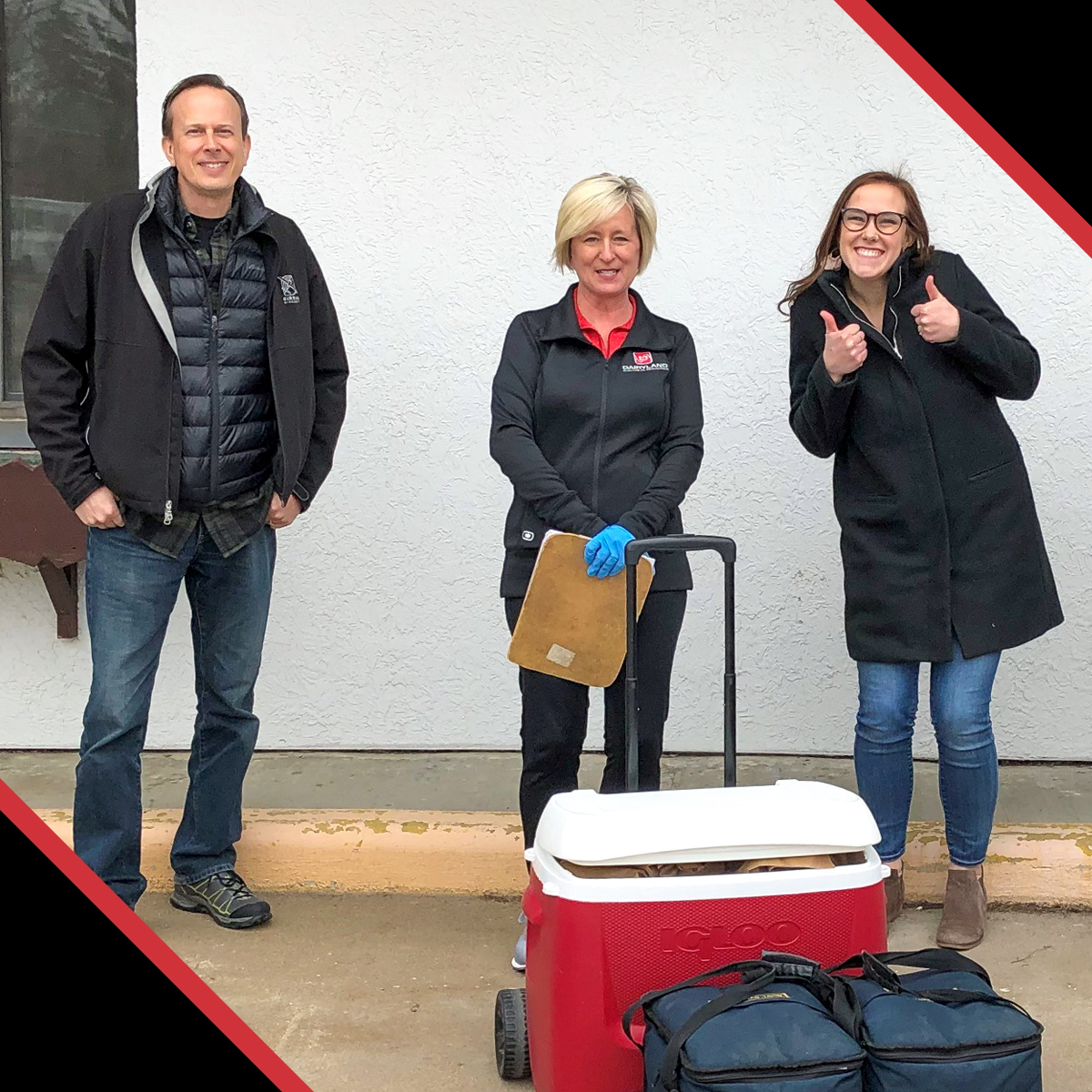
Here’s what a few more members of our team had to say about their experiences:
“This was my first time serving with Meals on Wheels and I loved it! It made me wish I could stay longer and chat with the wonderful, friendly people I met along the route. I’m grateful services like these continue – especially with such care – in times like these, ensuring there aren’t gaps for a key population in our town. I hope we were able to bring some joy and cheer today!”
“It was eye-opening to see how some of our older generation is living.”
“Dairyland makes it possible for its employees to volunteer during the work week; I’m especially thankful for that benefit right now because it allows me to give my time and effort when it’s most helpful to local community providers and responders. There’s a lot going on in our world right now and it feels good to do something about it.”
“It was satisfying to deliver a healthy meal to someone who truly needs it.”
“How easy, yet necessary, it is to serve in this way.”
We appreciate Sandy’s example – in addition to many others – of living engaged when times are tough.
Your stories encourage us, and we would love to learn from you! What creative ways have you responded to COVID-19? Send us a message at LiveEngaged@dairyland.com.
A quick survey of the news is often enough to strip away the holiday cheer and sink a person into a deep despair. Conflict, mass-displacement, injustice, violence, natural disasters, and the list goes on.

What has brought us a glimmer of hope, however, is seeing people respond generously, selflessly, and daringly. We have started a new practice at Dairyland: sharing together every few weeks the wins and celebrations of our global partners.
As news stories broke about the crisis at the US-Mexico border we learned that our partners were there. When Hurricane Dorian devastated the Bahamas our partners had already arrived with life-saving aid. And when we grieved over the many men, women, and children fleeing violent conflict in Syria, we learned that there too our partners were responding.
As anyone who is familiar with Dairyland knows, we are not a nonprofit organization and we are limited in our humanitarian expertise. But we believe that business is a force for good and that, when we link arms with others, we can have far greater impact than when we operate alone. It is for this reason we partner with organizations that respond compassionately and effectively in some of the world’s most extreme situations.

On this Giving Tuesday, we want to share our partners as examples of well-vetted organizations doing highly effective work throughout the world, particularly in some of the most difficult contexts. While it is wonderful to celebrate the holidays with abundance – and we do – may we also extend that generosity and kindness outward to make the world a safer place for all.
Perhaps you have a favorite organization or cause you already support and we would love to hear about it. Send us a line at LiveEngaged@dairyland.com.
This past week we asked our youngest-ever contributor, 9-year-old Izzie, to tell us about her love of soccer and how she uses it as an opportunity to encourage kids on her team. Izzie proves that there are no age limits when it comes to living engaged.

Izzie considers soccer more than a hobby. It’s her passion – something she spends hours doing, whether playing in a tournament or practicing in her backyard. For the last 5 years she’s been honing her skills, not just technically but also as an engaged teammate. You see, Izzie isn’t just concerned about winning or about her own performance, she cares about how each member of her team is doing, noticing when someone is having a bad day, struggling with a situation at home, or simply feeling discouraged about how they performed on the field.
We asked her a few questions so you can hear directly from the girl who will make you wish she was on your team and who inspires us all to be the best cheerleaders we can be for others.
What makes a team work well? If we have fun together it makes everyone want to play soccer. [Last weekend] we went to get ice cream as a team, sat together, and were laughing so hard with each other. It’s important to do those things because it makes our team closer and we want to spend more time together. We know we’re going to play with our friends because we spend time outside of soccer too.
What is something you do to make the team better? I focus on encouraging others. I have a friend who plays goalie – she’s really good at it – but sometimes when the ball goes past her, she doesn’t feel very good about herself. Sometimes I’ve heard fans and others watching making jokes. And I’ll say, “It’s okay, it’s just one; we’ll get it next time!” to try to pick her up.
My other friend, who was on my soccer team last year, was really down on herself, thinking “I can’t do this, I’m so bad at this.” I didn’t think that was true because she’s actually good at soccer. I think to myself, “If I can give her a boost, that will make her want to keep doing her best and not feel so down on herself.”
How do you know someone is having a hard day? Sometimes they tell me or they just look really sad or aren’t playing as hard as I know they can. Some kids come from hard things at home or on the bus and are discouraged. I try to give them a boost.
Is that how you see your role, giving people a boost? Yeah!
What about when other kids do something good? I cheer loud for them so they’ll feel good about themselves and love playing soccer even more. After the games I always find a few teammates and say, “Nice goal!” “Good pass!” or “Great game!” to encourage them.
How do you see yourself living engaged on your team? I focus on being a great teammate and try to make others feel good… I give them a boost! That’s how I think of myself living engaged.
Greg, Dairyland’s Marketing Manager and Izzie’s dad chimed in too, saying, “One of the things I find really neat about Izzie is how focused on others she is. When she was little, we would always have her say thank you to the coaches and find one teammate to encourage after each game. Now she does it automatically regardless of how the game went, or how she played. And it’s not just one person anymore; usually she finds as many people as she can. Her mom and I are very proud of how hard she competes, but even more, how focused she is on encouraging and building friendships with others.”
Wherever you find yourself, there is an opportunity to spread a little kindness and give someone else the boost they need. How will you Live Engaged?
This week, learn about what Dairyland’s Senior Applications Engineer Art Birx does in his free time.
It didn’t take long after starting his orchard – filled with young peach, pear, apple and plum trees – to notice one missing element, and a crucial one at that: bees. They were MIA, nowhere to be found.
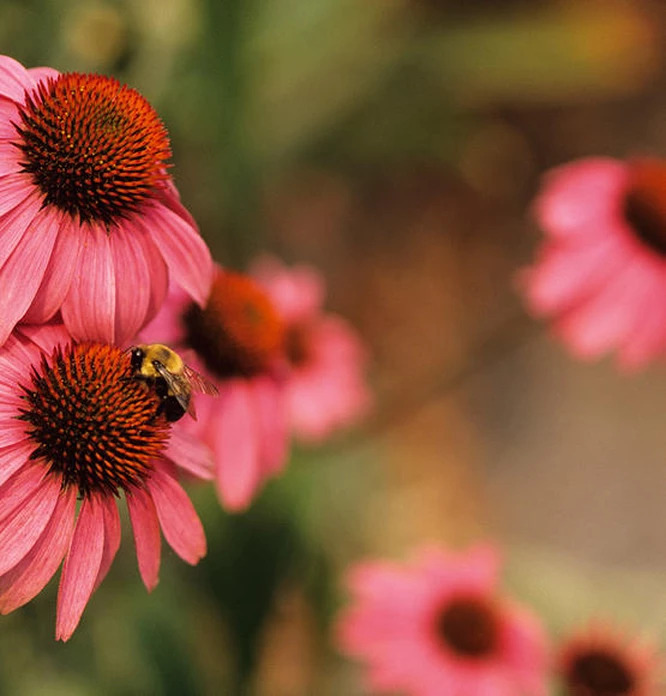
Many of us think of bees as the flying nuisances that elicit our highest-pitched squeals or fastest duck-and-run tactics to avoid a painful sting. Though bees get little credit, however, they are significantly responsible for food reaching our tables and nourishing our bodies.
Bees are pollinators, which means they transfer pollen or seeds from one flower to another. This voyage enables fertilization and cross-pollination, making further flower, fruit, and crop growth possible. Almonds, avocados, carrots, broccoli and numerous fruit varieties are just a few of the foods whose success is largely connected to bees. These flying creatures also make honey, that gloriously sweet and sticky substance enjoyed by far more than just the infamous Pooh Bear.
Unfortunately, bee populations across the United States are decreasing at a rapid rate due to Colony Collapse Disorder which is correlated to climate change, pesticide and parasite presence, as well as habitat loss (NRDC). In Art’s North Carolina community specifically, it was discovered that large amounts of herbicide were being used to kill weeds along most roads – likely a key contribution to the decline in neighborhood bees.
So Art decided it was time to not only tend to his orchard but become a beekeeper too, expanding his collection as he is able. By doing so, he not only boosts the trees’ success, he also plays a small part in changing the ecosystem of his community. And it looks like the inhabitants of his hives will be thanking him shortly with early honey.

“I just notice what someone needs and do it,” says Art, whose noticing has led him to serve in numerous other capacities throughout the area. Though not one to self-promote, he has often reached out to a friend, neighbor, church or community member with offers to help. Some days that means mowing the lawn of a man whose wife just died from cancer or cooking meals for his church; other times it’s building a wheelchair-accessible ramp or providing Christmas to families who could not afford to provide a Christmas for their children.
“It all comes back to integrity,” a guiding principle which he defines as “doing the right thing when no one’s watching.” The language of Live Engaged might be relatively new to the company, but Art has tried to pursue this commitment all his life. He might have a plan if he ever wins the lottery (he would use it to support clean water initiatives), but he isn’t waiting for a big win or more money to make a difference in his immediate surroundings. “You can talk about the right path, but to walk the right path is totally different,” he says.
This post is part of an ongoing series, highlighting true stories of living engaged. If you would like to contribute, please reach out to us at LiveEngaged@dairyland.com.
Reflections from Mike, Dairyland’s President.
I have good intentions. Lots of them. You wouldn’t believe the number of things I plan to do – in my mind. Wired as an optimist, I can reset pretty easily when I get off track, reminding myself that “this is do-able.” Sometimes my optimism can lead to over-committing, but I’m learning to be more realistic over time. Still, this is optimism on my part with an intention to truly act and carry through to the goal.
Sometimes the opposite is true. I can look at upcoming tasks or goals and pessimistically consider what it takes to start or complete that effort. What happened to that optimist? He must have been hit by the Boulder of Reality while climbing the hill. Thwaak!
I find that there is a third variation that operates in the grey, in between the first two. These are the roles or tasks that I want to perform, and feel strongly about, but with deeper reflection I find that I don’t really have a plan. If I’m being honest, I have to question what my intentions and priorities are, when those “important” things don’t get done over a long period of time.
If we are being honest, isn’t it nice when there are enough hot, burning fires in our day that we can easily hide behind the urgency of those tasks to not perform what is truly important?
In the short term, it’s easy to escape accountability (to ourselves, if not someone else) when the fires demand our immediate attention. Sometimes, it feels good to be a problem-solver, applying triage to the crisis-du-jour. However, there are things that I know I should get to that don’t seem to rise to the surface – what about those?

I recommend that everyone read an important guiding principle about the “urgent versus the important.” Just search the internet for those terms and you will find it instantly. Dwight Eisenhower was the master of this principle, with vast responsibility leading up to Operation Overlord to retake Europe in World War II. We may not have the responsibility of an Eisenhower, but we all daily fight the urgent versus the important. Getting the two straight will help each of us with prioritizing work and personal life.
So, what is urgent and what is important? We each have to determine that, but leadership at Dairyland recognizes that there are truly important human needs that must be addressed, and we can’t let distraction get in our way.
Read elsewhere on this blog about the soul-crushing existence of people around the world whose basic needs are not even close to being met. Another day, I’ll write about my trip to South Sudan, where this was on full display, reminding me how utterly desperate many are living in this world and how little it takes to change their existence for the better. Other needs are obvious to us right in our own community.
My goal, for myself and Dairyland, is to fight any lack of planning, as well as the distracted “squirrel” moments, and move ever more toward being intentional about how to address those needs.
We want to Live Engaged, using our talents, resources, and service to positively affect the world around us. Something good also happens in us when we do so.
As one of Dairyland’s first employees, Sherry has been with us for the long-haul, building and preparing our products before they’re shipped all over the globe. She is one of the kindest, cheeriest individuals you will ever meet and we’re so grateful to have her on our team. Recently she shared her story of living engaged through meaningful volunteering.
Sherry remembers when she first considered being a blood donor. “Before I gave blood,” she says, “I thought ‘I don’t even know if my blood is good enough.’” “What if something is wrong with it?” she wondered. Despite her worry, she went to see if donation was feasible. When the results returned, she discovered that, not only was there nothing to worry about, her blood type is classified as “rare” and crucial for saving newborn babies.
Sherry has an O- blood type and, additionally, has CMV Negative status. This enables her blood to be used universally (O- blood can be utilized by all other blood types). Not only that, but that blood is absent of the relatively common cytomegalovirus (CMV), which newborns, pregnant women, and some other vulnerable patients cannot be exposed to.
As a mother of 3 and lover of babies, Sherry is encouraged that she can play a small part in protecting their lives. “To go from worrying to knowing they want to use it for babies makes me feel so good – [think about] the future ahead of them!” In the wake of numerous shortages, she has “traveled” hundreds of miles away to meet needs across the United States.
Today she even connects these dots to her grandfather. He was born on January 11th in NE Wisconsin within the walls of their family’s 1-room cabin. At the same time that he prematurely entered the world, their community was building a dam which temporarily brought a doctor to the area – a very rare occurrence for that rural area. Her grandfather barely survived – and wouldn’t have if the doctor had not been present – but they tenderly rested him in a warming box on top of the wood stove and fed him milk through a dropper until his tiny 3 pound body began to respond and grow. “If he hadn’t lived, I wouldn’t be here today,” says Sherry. That knowledge makes her grateful for the technological advances we’ve made, the generosity of others to protect vulnerable lives, and way she too can participate in it.
You might think your contribution is small and insignificant, but even seemingly little acts can make a lasting difference. What do you have the power to influence and transform for the good of others?
Kristy, Dairyland’s Financial Controller, shares about the needs of local schools and how she chooses to be part of the solution.
As a working mom I realize there are many days that my daughter will spend more time at school with her teachers than with me. While that’s a sad thought, it’s a reality for many households and it makes me want to help ensure that their experiences at school are the best they can be. We all want the best for our kids, and our schools frequently need extra help; even small amounts make a big difference.
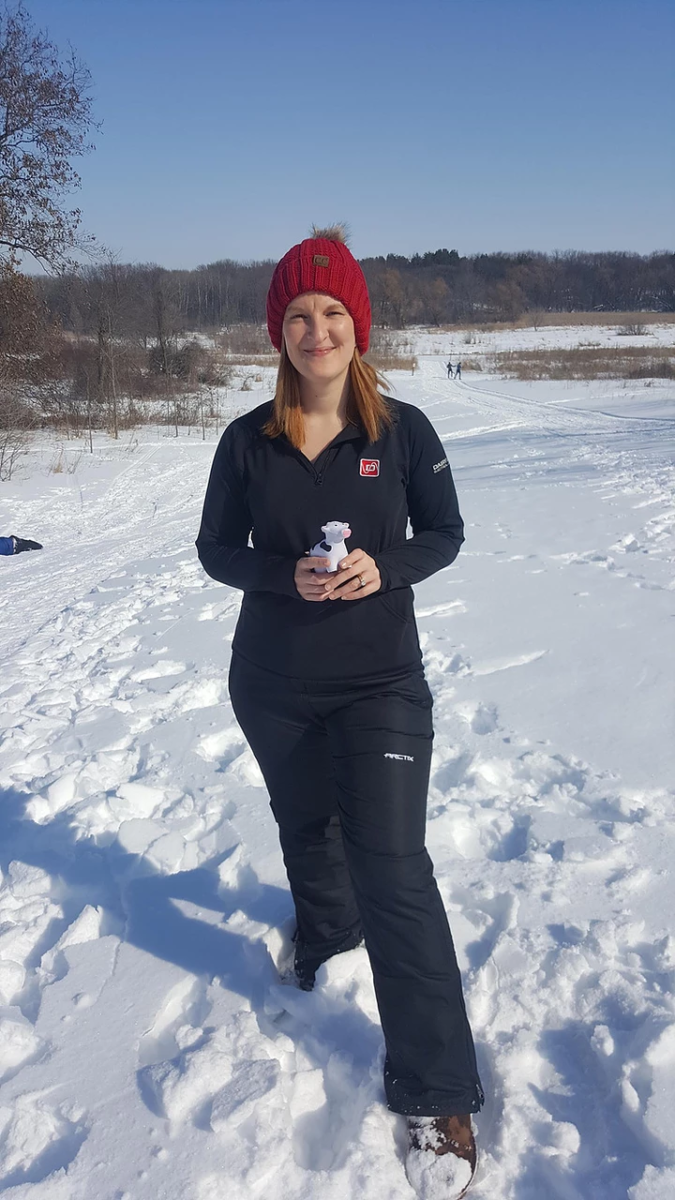
Did you know that teachers, out of their own pockets, buy Chapstick in the winter to keep our kids’ gentle lips from chapping? Or that they buy Kleenex for their tender little noses because those provided by the schools are like sandpaper? I didn’t until my daughter asked if we could send some to school to help restock the teacher’s supply. Our teachers do little things every day to care for our children that parents frequently don’t even realize, and that’s why I volunteer with the Cambridge K-12 Parent Teacher Organization (PTO).
I’m the treasurer for the PTO in the city where I live and the school that my daughter attends. I help with financial matters, fundraising ideas, and participate with fundraisers. Our overall mission is to enhance educational and extracurricular experiences for all children in our district. We are a small nonprofit with no employees and a small, passionate core group of volunteers, so we try to be very intentional with our activities.
Our resources are used to provide financial support for activities the school otherwise wouldn’t be able to offer, such as roller skate rentals, a traveling STEAM museum for the elementary school, cross country ski sets for the middle school, and a clay pug mill for the high school. These costs are outside the school’s budget and wouldn’t be provided without the PTO support. We also help with special requests which allow students who need financial help the ability to participate in programs with their peers so they don’t get left out.
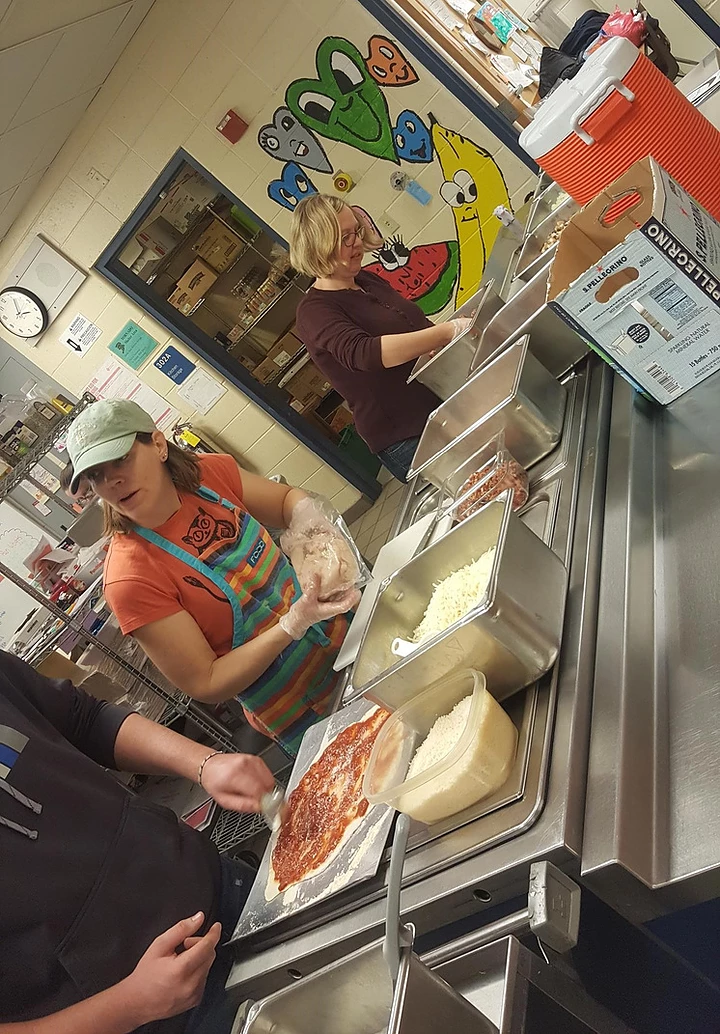
Beyond the financial resources we provide, we help connect the community to our schools. We engage community members to help with or attend fundraisers and to learn more about our schools and the community that supports it. We recruit students to learn about what it takes to help support the activities that provide some of the benefits they enjoy.
Making pizzas 4x per year as a fundraiser is a wonderful way for people (mostly moms) to connect about experiences with our children while providing support and friendship. I’ve grown my circle of mom friends tremendously though this and we help each other in ways that are invaluable at times.
We’ve all heard that it takes a village to raise a child and that is so true. I appreciate the flexibility and volunteer opportunities Dairyland has provided me to be active with our children, schools, and my community.
I can see the impact of living engaged and the truth behind our logo when I look at how much opportunity and happiness can come from engaging with something you care about.
Kailey, Dairyland’s Organizational Development Liaison, shares about her experiences volunteering with refugees in the US and how they have impacted her.
They timidly enter through the community center’s front door, up the steps to be greeted by a smiling face offering a name tag, a safe place for their children to play, and a seat at the table.
These individuals, mostly women, are refugees – new to both the country and Madison more specifically. Most come from warm climates, making the bitter cold of Wisconsin feel especially miserable. Most have already spent years crowded in refugee camps waiting to be granted asylum. Most have personally witnessed violence, experienced trauma, and are well acquainted with the stress of fleeing home. Many had successful careers, are educated, and were contributing members of society in their home countries. All have fled their homes because of war, persecution, or disaster.
I’m here because I volunteer with Open Doors for Refugees (ODFR), an all-volunteer group that helps refugees make a home in Madison. Though ODFR provides a broader array of resources to refugee families, on Sundays our main priority is to build relationships, drink tea, and practice English conversation. It’s delightful.
The first week I sat at a table with two Iraqi women. Both have a basic understanding of English; my fluency in Arabic, their native tongue, is even more meager. Yet we sit in a circle, smile, make hand motions often, and go about the work of practicing introductions, colors, numbers, driving directions, and job-related phrases. We go about the work of welcome and connection.
I have been interested in and concerned about refugees – especially those who have become my proximate neighbors – for a while now, beginning in college when I learned about the expansive global community living only a few blocks away from my campus.
I began joining a weekly craft club for middle school-aged refugee girls then tutored a Burmese family for a year prior to graduation. I loved those weekly visits. We drank Pineapple Fanta, explored the local library, shared stories and meticulously rehearsed the words and phrases that would become staples in their new lives.
I thought about the feeling that arises when we experience the pangs of loneliness, the insecurity of newness or displacement, and the counteracting power of feeling seen, cared for, and invited in. Though I have never experienced the refugee reality, I have sometimes known relative glimpses of those feelings as well as the human touch that didn’t allow me to stay isolated. Doing my best to reciprocate with our new guests seems only natural.
Spending time with the refugees I have known has profoundly affected and enriched my life. Whether from Myanmar (Burma), Nepal, Bangladesh, Iraq, the DRC, or Syria. As trust grows, we move from sharing about the activities of our days and what we love to eat to the stories of our childhoods, of home, of joy and disappointment.
Maybe I play the role of “volunteer” but before long we simply become co-learners. And that, for me, is a way I can Live Engaged.
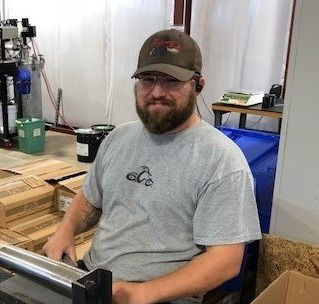
“I’ve been addicted to fishing since I learned to walk,” writes Evan, Production Assembler at Dairyland’s Pound location. It’s a passion that began in his first years of life and only grew from there, continuing into the present as he shares it with others – including his kids. “I love fishing,” he says, “but even more so love sharing my experience and knowledge with others; I love getting people out to fish that normally wouldn’t go and see them catch a new fish or get a personal best.”
Evan also felt compelled from an early age to serve with the military and at 18 years old he enlisted with the Army National Guard. The next 5 years were spent on active status traveling to multiple bases across the United States before being deployed to Iraq for a year-long tour.
Today, Evan has found a way to combine these two worlds in a personal and meaningful way. After getting connected with the non-profit Fishing With Vets, an organization that exists to “provide veterans, both active and retired, with an opportunity to enjoy the great outdoors,” Evan began handcrafting custom fishing rods and donating them. Each rod he designs and creates is given to a veteran on a memorable fishing weekend in their honor.

In addition to other volunteering, such as at Habitat for Humanity, Evan spends time crafting beautiful pieces like the one below.

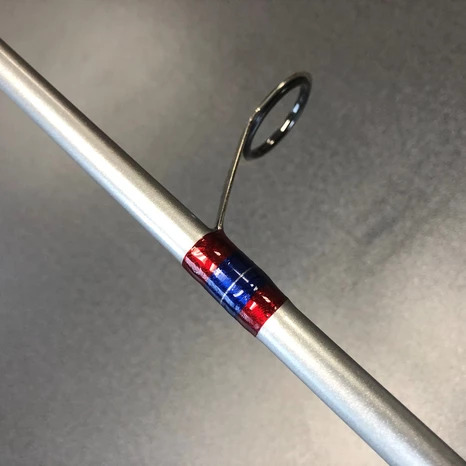

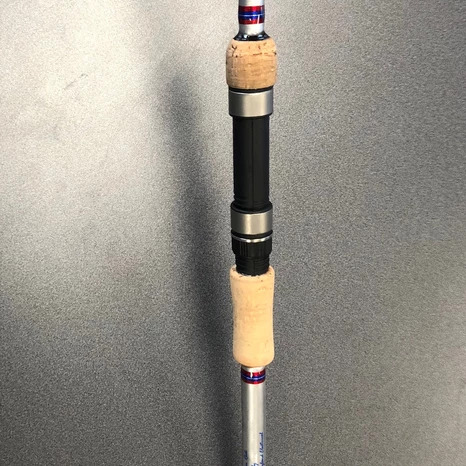

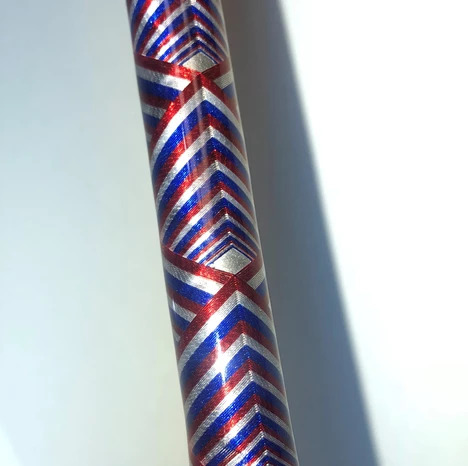
“I picked up rod building as a hobby which paired my passion for fishing with my ability to build and design. It only made sense to give back to a great organization that I got to be part of last year.”
Thank you, Evan, for your service to us, our country, and others who have served.

In early 2018 a growing subset of Dairyland, comprised of both employees and their family members, decided to incorporate regular blood donation into their lifestyles. What started with one individual rapidly expanded; now 15 members donate, bringing our combined giving total to 37 units in only 10.5 months.
Linda, Dairyland’s Shipping & Receiving Coordinator, who played an instrumental role in boosting our momentum, shares why she cares so deeply about giving back this way. It first started when she was employed at the American Red Cross before her 19-year tenure (to date) at Dairyland.
“I saw and heard first-hand how blood donations impacted patients.” Those patients weren’t just distant strangers but also close family members including her husband, dad, mother-in-law, and more. Their lives were preserved because other generous contributors chose to give.
Linda also recalls the AIDS epidemic of the late ‘70s and early ‘80s when patients did not know with certainty if their transfusions were safe. Today the Red Cross states someone needs blood every 2 seconds, whether due to surgeries, chronic illnesses, a traumatic injury or cancer treatment. Because it cannot be manufactured, blood must come from volunteer donors, a reality further complicated by the fact that under 38% of the population is eligible to donate.*
“It’s such an easy process that can have a huge impact,” says Linda whose “boring” (her description, not ours) but healthy lifestyle has enabled her to give for years when others cannot. And an impact it certainly has since each unit can save up to 3 other lives.
As we begin 2019, our expanding group settled on a goal of donating 60 units, translated in lives potentially saved to 180. It’s just another way we can Live Engaged and practically respond to the needs around us.
As Linda would say, “Stay healthy and keep rolling up your sleeves!”
*The American Red Cross
/ˌlibəˈrāSH(ə)n/ (noun) the act of setting someone free from imprisonment, slavery, or oppression; release.
One of our intentions through the Live Engaged blog is to connect you with our global partners and share specifically about the transforming work they do. Going forward you’ll see more of these updates, especially the change they’re facilitating in vulnerable communities throughout the developing world. We hope these stories from the field encourage you as they do us. At Dairyland they fill our work with purpose, reinforce our commitments, and remind us of our own “bigger picture.”
Today’s update comes from International Justice Mission (IJM), introduced in an earlier post. Often individual rescue operations occur on a rather small scale culminating in perhaps 1, 4, or 7 individuals being removed from modern day enslavement at a time. That is simply the nature of much global slavery – it typically occurs quietly within private spaces such as businesses, farms and even homes. Therefore, to investigate and then interrupt the activities of each requires extensive amounts of time and capital.
Regardless of the scale and speed, each time someone is rescued we celebrate. We celebrate because every rescue means that one more life is transferred from oppression to liberation and one more reminder goes out that injustice and abuse will not be tolerated. It informs corrupt systems and individuals that their time enacting violence against the poor and powerless is limited. We continue to see progress as IJM works tirelessly with local governments, agencies, and other service providers to enable these kinds of outcomes in over 15 countries.
Several weeks ago we received the news that a group of 52 men, women, and children were freed from a ginger farm in southern India just before Christmas as a result of IJM’s work and partnership with local authorities. Despite the happy ending, it is a sobering story of horrific treatment at the hands of the farm owners and managers. Reports state that no one in the group was without visible and notable indicators of trauma and severe physical abuse – including the children. They were held on the farm for 3 years with no wages and locked in a 1-room shed each night.
Now, as a result of the thorough investigation and successful operation, they will all receive the care, treatment, and support needed to heal and be restored. Not only that, IJM is actively working to convict the 5 perpetrators who have been arrested and charged.
Though bonded labor was made illegal in India beginning in 1976, it still persists. Examples such as this call us to act more vigilantly and collaboratively to overthrow slavery in all its forms.
Today we celebrate the 52 lives that will no longer be trapped in violent bonded labor. We celebrate the brave individuals who work for their freedom, often compromising their own safety for protection of others.
If you would like to learn more about this story or International Justice Mission, you can visit their website here or give us a call.