
“I want to be part of this. I want to be part of this family.” Those were the words of a supply partner after visiting Dairyland’s manufacturing facility. Dairyland’s Supply Chain Manager, Mitchell Christensen, recalls that conversation as if it occurred yesterday. He responded, “You are. You’re a partner and supplier to us and so you are a part of this family.” Maybe more than any other story or description, this exchange captures the expression of Live Engaged through Mitchell’s work and the difference it makes in Dairyland’s supply chain activities for all involved.
Values-Aligned Supply Chain
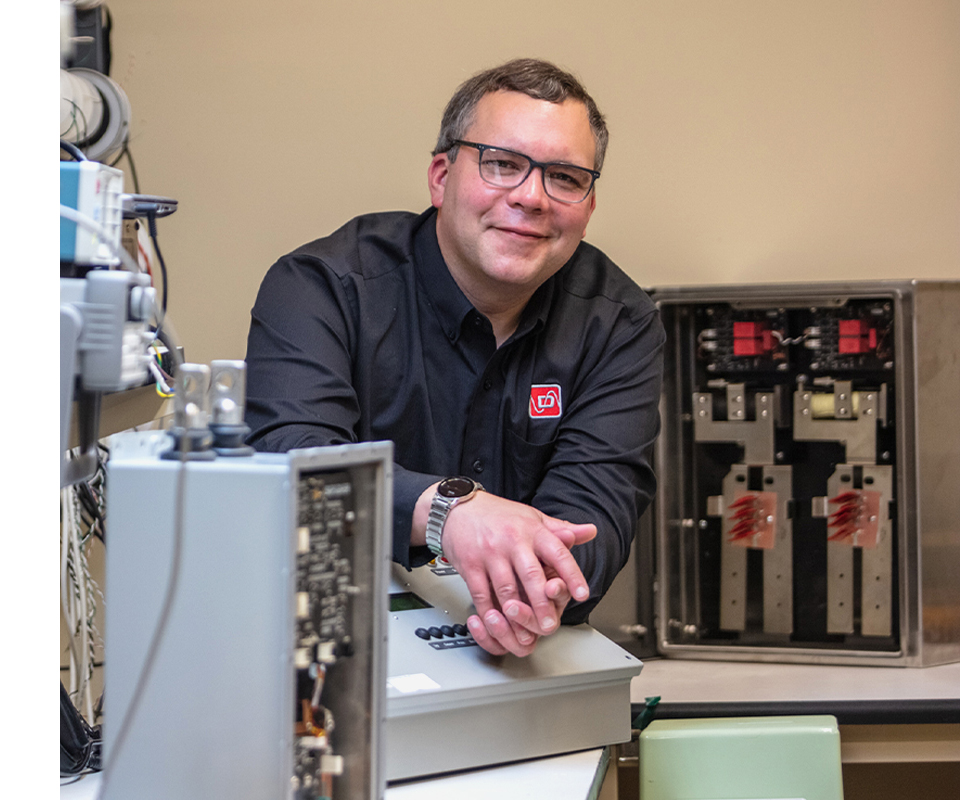
Mitchell describes his approach to supply chain as “multi-faceted,” requiring continual evaluation of risk while actively strengthening relationships with partners. If you shadowed him for a day, you would quickly learn just how many details he assesses to keep Dairyland’s supply chain strong. Managing it requires an understanding not only of the details related to our components and their procurement, but the practices of Dairyland’s partners, global political climates, weather patterns, precious metal indexes, and more. Doing so—and with excellence—ultimately means that we can offer exceptional service to our customers, providing them with a smooth, on-time, and high-quality experience.
Important above all else are the relationships formed. “I’ve met amazing folks over the years who I have come to know professionally and even personally.” One of Dairyland’s five core values is that People Have Inherent Value, and that makes a difference in how we do business. “Everyone has value; it’s that plain and simple. It doesn’t matter if you’re the CEO or the dock worker…everyone has equal value and gets treated the same. I try to enter into every conversation with that as the driving force.”
Ethical + Just
Holding that value extends deeply into ethical sourcing, moral business practices, and inviting partners into Dairyland’s Live Engaged network. “We partner with suppliers who are ethical, who treat their employees and the environment properly,” says Mitchell. And he will go to great lengths to ensure what is said on paper matches the real-life practices.
One example of Mitchell’s determination in this area is through the partner site visits he conducts. Acting as part anthropologist, Mitchell looks for clues about the overall wellbeing of partner companies – especially how they treat their employees. He speaks with frontline employees, observes what is or is not communicated, what populates message boards and scoreboards, the implementation of safety measures and ease of use, programs that exist to support employee wellbeing and engagement, the company’s own constraints, and more. “You cannot allow the cost of doing business to include failure to your employees’ wellbeing.” That’s just the right thing to do and what we look for.
Mitchell also looks closely at sourcing as it relates to conflict countries or areas—places with known human rights and ethical work practice violations, such as slave labor, smuggling, illegal extraction of raw materials, and more. If our partners were engaging in these relationships, “that would be a deal breaker for us.” We will not save money and allow such practices—“it’s a hard line in the sand and we’ll quickly move on from that partnership.” Though already a deeply held conviction, the importance of this stance is regularly reinforced through Dairyland’s justice partnership with International Justice Mission (IJM). One of the ways we support IJM is through investment in their work to end exploitative labor which largely targets the poor and vulnerable.
Mitchell shares this with his supply partners, inviting them into the bigger story of impact.

Just as there is a chain of supply, so is there a chain of positive impact. Because of Dairyland’s partnership with IJM, that component manufactured through a supply partner becomes a mechanism that helps liberate people from bonded labor, whether in Indian brick kilns, illegal Thai fishing boats, or elsewhere.
Linking the Pieces
That resonated for the partner quoted above when he saw it for himself. “He met our team, saw his product, watched our production team put our product in his and send it out the door. We had lunch together—the whole manufacturing facility—and he was just part of the family [making this possible].”
Wherever you are, and in whatever work you do, you have an opportunity to Live Engaged. If you are a partner to Dairyland in some capacity—whether buying our products, supplying parts, improving our systems, etc.—you, too, are making global impact possible. You are helping us make a safer world through application of our solutions, and partnership with great organizations like IJM. Thank you!
What if: what you are most passionate about doesn’t just have to stay a hobby but can become part of how you Live Engaged? In this article we look at how Mike Tachick, Dairyland’s President, uses his enthusiasm for flying to impact the world around him.
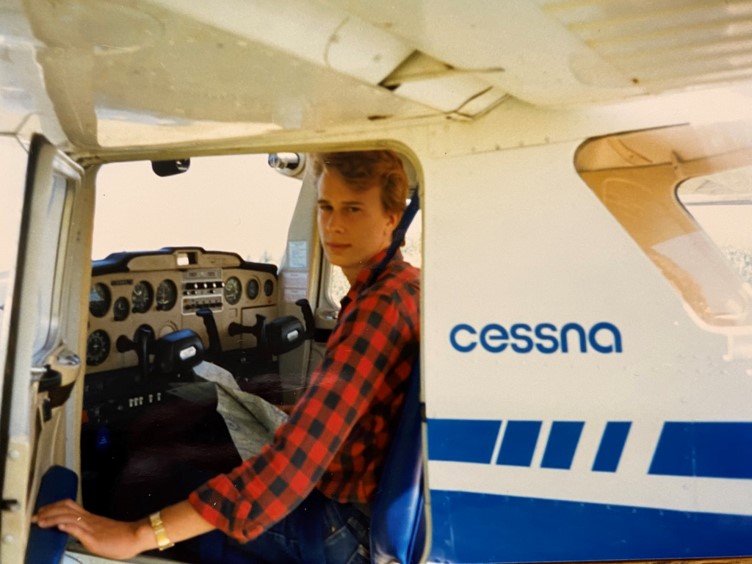
Mike’s love for aviation began when he was just eleven years old. Tagging along to flight lessons with his father Henry provided an opportunity to watch, learn, and read until he was old enough to take lessons of his own. Over the years, Mike worked hard to save money by doing farm work in his northern Wisconsin community. When he was 16, he paid $20 for an introductory flight lesson with an ex-military instructor, who gave him hands-on experience right away. By age 17, Mike was hooked. He went on to earn his own pilot’s license, fully launching his passion for flying.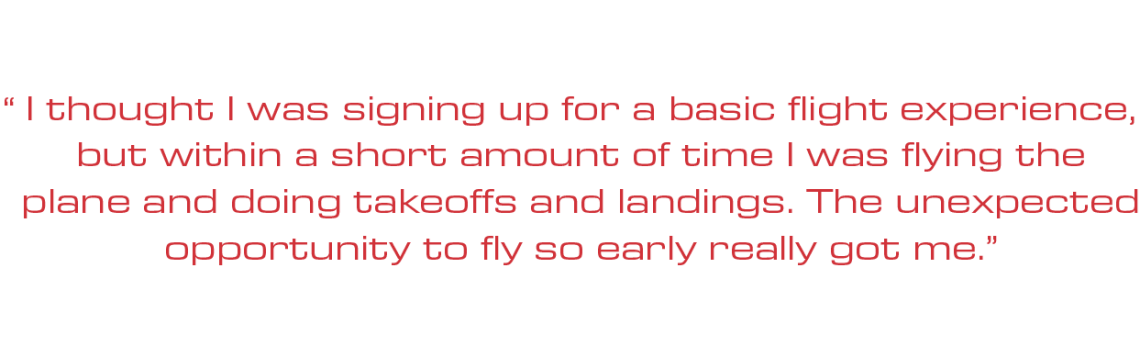 For Mike, flying began as an exciting, challenging, and energizing hobby. With time, he was able to use aviation to benefit Dairyland and enable more connection with industry customers and friends. He spent hours in the air traveling to conferences, speaking engagements, and meetings. “I’ve always enjoyed travelling and building relationships with the folks in our industry and it was a blessing to be able to make those trips as a pilot. Seeing the landscape of our country change from farmlands to desert to mountains from the air is really fascinating,” said Mike.
 |
 |
 |
What if My Passion for Flying is a Way to Live Engaged?
As Dairyland’s Live Engaged initiative began to grow, Mike started to ponder ways he could help others through his love of aviation.
A 10 Minute Flight = A Weeklong Hike

For years, Mike provided financial support to Mission Aviation Fellowship, a nonprofit organization that offers aviation, communications, and learning technology services to humanitarian programs in the Americas, Africa, and countries of the Asia-Pacific region. In many of these remote areas, the geography—be it mountains, desert or otherwise—limits people from traveling long distances to receive medical care. This is where MAF volunteers step in to deliver life-saving equipment or medical supplies, or to transport patients to medical facilities. As an avid pilot and experienced business owner, Mike recently joined the executive board of MAF, and now provides guidance and encouragement to their team that supports over 1,000 humanitarian nonprofits around the world.
MAF was founded 75 years ago by a group including Betty Greene, who found herself in a similar situation as Mike – searching for ways to use a passion for aviation to impact the world around her. After the inaugural flight on Feb 23, 1946, MAF flights continued for 75 years impacting the world around them in a significant way. Betty’s story will be highlighted in the upcoming documentary, Ends of the Earth (trailer below).
Flying People in Need
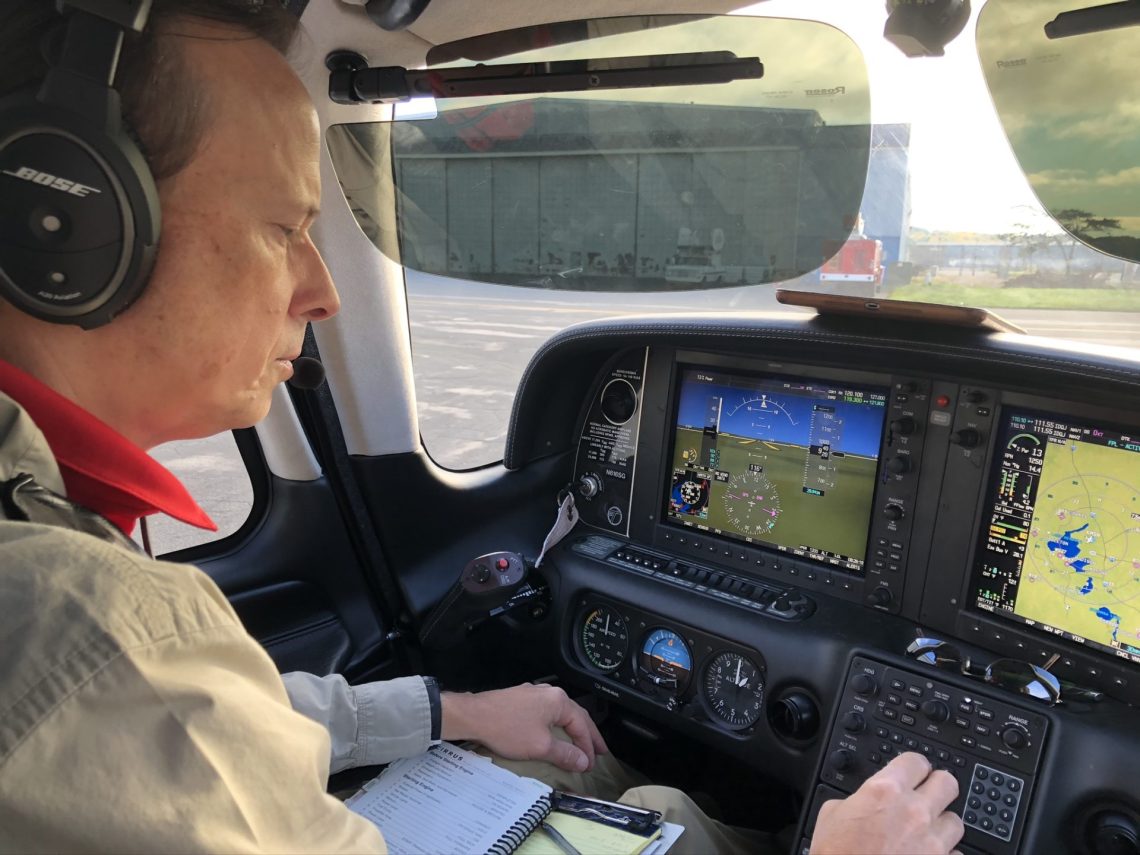 Mike is also a volunteer pilot with Angel Flight, a nonprofit summarized best by their tagline, “people flying people in need.” Certified pilot volunteers like Mike take people with non-emergency medical treatment needs around or across the country to receive care at no cost to the patient. This could mean helping people with medical conditions who cannot afford to fly, or delivering blood products in emergency situations. Mike added, “I was looking for ways to use my passions to serve others. Angel Flight is a perfect fit to help others and do something I’m excited about.”
What are you passionate about? Have you considered how that fascination or hobby might be a way for you to invest in yourself, show up for your circle, strengthen your community, or even engage on a global level? Tell us how you Live Engaged here.
One of life’s greatest and simplest pleasures is food – the mouth-watering aromas, delightfully-balanced flavors, and the comforting feeling of a full stomach. For those of us fortunate enough to have access to regular meals, we easily take it for granted that the table will always be full, and our nutritional requirements are being met. But for many, both across town and around the world, tables are not abundantly loaded with food. Changing that reality is far from simple.
Where We Find Ourselves
This past year, it is estimated that 155 million people lived at a crisis level of hunger. Crisis level is characterized by “food consumption gaps that [lead to] high or above-usual acute malnutrition,” requiring urgent intervention*. This number is a 20-million-person increase over the prior year, with countries like the Democratic Republic of the Congo, Yemen, South Sudan, Nigeria, and Syria among those most devastated.** Such estimates do not even include the hundreds of millions of people that are hungry and not receiving recommended levels of nourishment.
Why This Happens
The Global Report on Food Crises states that war and conflict are the greatest contributors to food insecurity.** In a state of conflict, people are often displaced, their farmlands and livelihoods are destroyed, and their access to food and aid is disrupted. After war and conflict, extreme weather (ranging from storms and flooding to drought), economic instability, and more recently the COVID-19 pandemic are the most common contributors to food insecurity.
Responding Through Partnership
Samaritan’s Purse (SP)—one of Dairyland’s partners—recently shared with us their programs designed to fight hunger and keep people healthy across numerous countries and contexts; some highly complex and dangerous. One such response occurs in South Sudan at the Yida refugee camp where 65,000 people fled after their homes and farmland were destroyed by bombings in Sudan. At Yida, SP partners with the World Food Programme to feed this new community who would not have survived without the monthly rations.
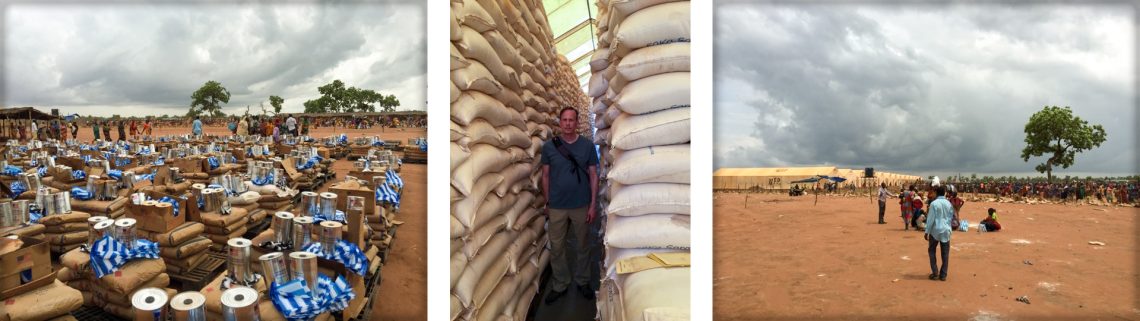
In 2016, Dairyland’s president Mike Tachick, joined Samaritan’s Purse at the Yida refugee camp in South Sudan to learn about the carefully coordinated logistics required to help feed so many people.
Reading about issues as large as this can leave one feeling overwhelmed or even numbed by the magnitude of the problem. This is where the power of partnership encourages us, because we know we can accomplish more together than alone. At Dairyland, we have found that we can respond to hunger at multiple levels: the individual, the team, and the company.
The Individual: One member of our team delivers fresh meals to local seniors every week through Meals on Wheels. Another organized a food drive among our production and supply chain teams this spring. Lastly, our Financial Controller distributed meals to families with school-aged children who could not pick them up when school programming went virtual.
The Team: Recently our team was able to work with Rise Against Hunger to pack over 18,000 meals which will be distributed in some of the crises mentioned above (read about that experience here).
The Company: We choose to partner with and learn from effective organizations like Samaritan’s Purse who can respond to a far greater degree than we ourselves are trained for.
What role might you play? We invite you to join us as we grapple with this reality and how we can Live Engaged to make a safer world, both for our own families and others. If you are looking for a great place to start, sign up for Volunteer Day this fall.
*Global Report on Food Crises, 2021, p. 11
**World Food Programme, 2021
The day started with the rhythmic beeping of a supply truck slowly backing down the driveway. Soon a crew began unloading large bags of rice, soy, dehydrated vegetables, and tubs of supplies. After the 12 stations were assembled, the noise and activity levels quickly increased as masks, gloves, and hairnets were handed out, and individuals stepped into to their assigned roles. With the strike of a gong (yes, a real one), the Dairyland team and their families got to work assembling meals while lively music and healthy competition filled the space.
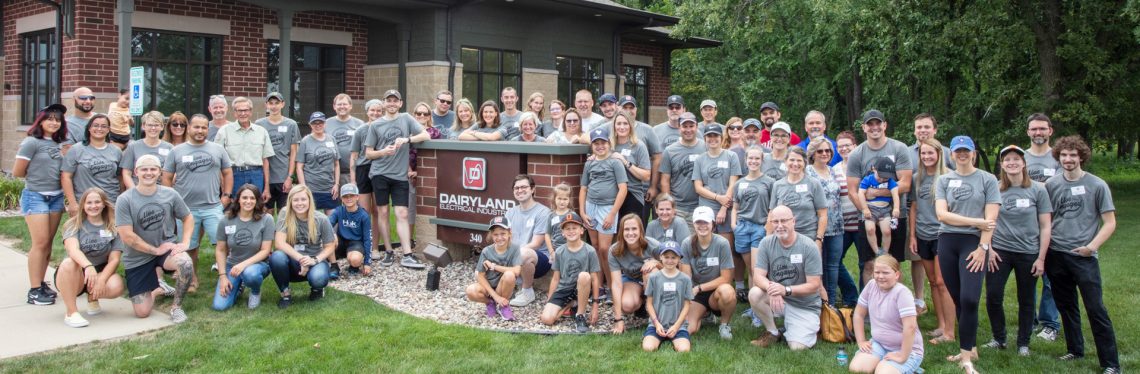
The Dairyland Picnic
Every July the Dairyland team and their families gather for a summer afternoon of food and fun. This year was even more special because we had the opportunity to partner with Rise Against Hunger, volunteering our time to pack meals for others affected by food insecurity. We divided into groups – measuring and combining ingredients into individual meal packets before weighing, sealing, and boxing them for distribution around the world. In just under two hours, 52 people packaged 18,576 meals.
Rise Against Hunger is an organization that is “growing a global movement to end hunger by empowering communities, nourishing lives and responding to emergencies.” Across the globe there are 821-million people who don’t have enough food to eat (Rise Against Hunger), with 41-million experiencing “life-threatening hunger” (World Food Program). The need for nutrient-dense nourishment is critical. Over the past year, issues like conflict, extreme weather and poverty have been compounded by the COVID-19 pandemic, heightening the need for food and relief. Rise Against Hunger not only provides short-term emergency supplies—like the meals our team packaged—but they also work to empower communities toward sustainable self-sufficiency.
Volunteering together helped meet a critical need in our world and allowed us to think beyond ourselves, but it was also a great experience for our team to do together – exemplifying what it means to Live Engaged. Everyone—kids, teens, and adults—easily found a role to play, whether ladling ingredients into funnels, labeling individual packages, or restocking heavy bags of supplies. We laughed, bantered, and connected as a team while the music reverberated and a sense of meaningful accomplishment settled around the room.
 Logan said of the event:
“This event was so cool to be a part of! All my coworkers and our families were in the same room working for a pretty inspiring movement. I genuinely felt fulfilled and that I was on a mission as I just hauled bags of rice. I couldn’t help but keep going!”
 Laurie later commented:
“What made the experience most meaningful for me was that an engineer and a homemaker could work shoulder-to-shoulder together for two hours and accomplish so much for a common good. When I looked around at the end of the event, I found I had tears in my eyes at the beauty of everyone working together. What I thought was a simple food drive turned into one of the most meaningful things I have done in 2021.”
[image-gallery display=”inline”]
If you want to respond to global hunger and engage your team, we highly recommend hosting a meal packing party with Rise Against Hunger. This would also make a great group activity for Volunteer Day!
What does it mean to experience poverty? How is it defined differently based on your perspective?

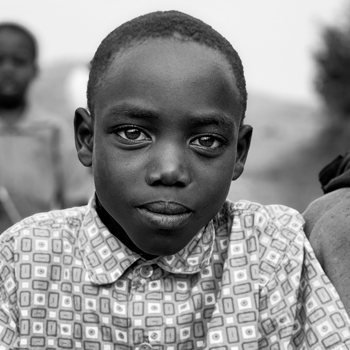
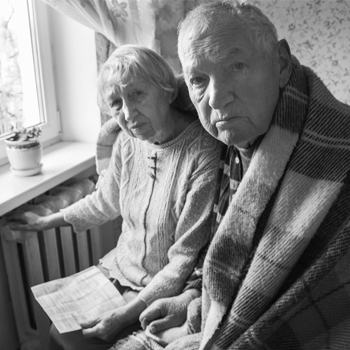
At a glance, you may define poverty as experiencing an acute or systematic material lack – not having finances, food, clothing, shelter, and other basic material items needed for survival. However, many people categorized as “poor” by those definitions describe poverty in more nuanced terms (World Bank, Voices of the Poor, 2000).
When asked “What is poverty?” they use words and phrases like these:
“Being poor is always being tired.” (Kenya, p. 36)
“Deciding who will eat, you or your son.” (Ukraine, p. 35)
“Poverty is lack of freedom, enslaved by crushing daily burden, by depression and fear of what the future will bring.” (Georgia, p. 37)
It’s having “numerous small, often dangerous, jobs, rather than one job.” (South Africa, p. 37)
“I feel ashamed, standing before my children when I have nothing to help feed the family. I’m not well when I’m unemployed. It’s terrible.” (Guinea-Bissau, p. 37)
“Fear of the landlord misbehaving, trouble by police. Poor people always fear exploitation.” (Nepal, p. 38)
“A feeling of powerlessness.” (Cameroon, p. 39)
In a recent interview with a member of our team, a new friend of ours Sandeep Maity shares about his own similar experiences with poverty growing up in an Indian shanty and “shopping” as a five-year-old at the nearby dump. We invite you to listen as he vividly retells what his life was like before being welcomed to a Compassion International child development center. Compassion International, a partner of Dairyland, exists to serve families and children, like Sandeep once was, trapped in poverty around the world.
From these snapshots we can see that poverty is more than just economics. It is physical, relational, psychological, cultural, geographical, and more. If poverty is more than money, then we must make holistic, meaningful efforts to end it.
That’s why we encourage and choose to partner with organizations that see the whole and contextualized person, honoring their dignity and humanity. Doing so requires relationship, humility, and a posture of genuine care for another’s long-term wellbeing. We must also recognize that since we cannot do it all, we are most effective when we specialize in our area of expertise and join forces with others who are experts in theirs. For example, our partners International Justice Mission and Equal Justice Initiative specialize in strengthening justice systems so people do not need to live in fear of abuse and exploitation. Another partner, Samaritan’s Purse, offer tangible survival supplies in the wake of devastating crises and displacement. Yet others, like Compassion International, co-create development initiatives that stabilize employment opportunities. Through these partnerships we are forming a world that is safer for people experiencing poverty.
In the first few months of this year, our team is doing a deeper dive into understanding poverty and how it is countered through the work of our partners. If you would like to learn more alongside us, or about how your Dairyland partnership has impact, please read more in the Live Engaged blog, or reach out to us at LiveEngaged@dairyland.com.
Reference: Narayan, D. (2000). Voices of the poor: Can anyone hear us? World Bank. Retrieved from https://documents1.worldbank.org/curated/en/131441468779067441/pdf/multi0page.pdf
How you Live Engaged might look different than the next person, but your actions are rooted in the same thing: a desire to make a positive impact in our world through 4 areas.
INVEST IN YOURSELF | SHOW UP FOR YOUR CIRCLE | STRENGTHEN YOUR COMMUNITY | TRANSFORM THE WORLD



The world is a big place. You might find yourself wondering “How does Dairyland expect me to transform the world?”
The great news is that you already are.
When you partner with Dairyland, through use of our products or your support of Live Engaged, you are helping us achieve our vision: to make a safer world. Whether by helping us inspire others to Live Engaged, or through the percentage of our revenue that goes towards addressing natural disasters, conflict, injustice and poverty around the globe, your partnership with Dairyland is already making an impact around the globe. That’s because we partner with organizations that have a proven track record of effectively and compassionately transforming vulnerable communities.
When you do business with Dairyland, you are furthering our Live Engaged initiative and truly helping to make a safer world.
THANK YOU.
About Our Partners
 International Justice Mission
IJM is an international NGO dedicated to enacting justice, ending modern-day slavery and liberating those enslaved in it. They investigate and convict criminals while rescuing and restoring victims so that all may be free. Learn more here.
 Samaritan’s Purse
 International Relief is a nondenominational organization providing aid to hurting people around the world. They help meet the needs of people who are victims of war, poverty, natural disasters, disease, and famine. Learn more here.
 Compassion International
 exists to release children from poverty through sponsorship and holistic child development. They are advocates for children, seeking to transform lives which then impact families, communities, and countries. Learn more here.
 Equal Justice Initiative
 is a nonprofit committed to ending mass incarceration and excessive punishment in the US, to challenging racial and economic injustice, and to protecting basic human rights for the most vulnerable in American society. Learn more here.
The intention we hold as the Live Engaged community is to authentically listen and learn – to get close to what is happening in our friend and family circles, workplaces, neighborhoods, communities, nations, and world at large. Bryan Stevenson states that “You can’t understand most of the important things from a distance. You have to get close.” It is our belief that by getting close, we increase our awareness, care, and concern while deepening relationships and better informing our actions. We do not expect perfection, but we are committed to intentionality – a hallmark of living engaged.
In that spirit, we have tried to craft a collection of resources that support a variety of learning styles and time windows. Not everyone has the space to dedicate hours to reading but may have a quick commute or lunch break. Learning comes in many legitimate forms. If it is helpful to you, we would gladly share a more complete list of resources (including books for kids & teens) that our team is using and benefiting from. In the meantime, we have included a narrower selection below hoping not to inundate you with options but rather offer a few on-roads to engagement.
For the evening movie person: Just Mercy, Selma, 13th, or the True Justice documentary
For the web surfer: Check out the Equal Justice Initiative website – it’s an incredible resource about their work and the present realities that make it essential. You can choose between a criminal justice reform and racial justice track – or complete them both!
For someone with 15-30 minutes over a lunchtime refueling:
- Videos: Race in America, Slavery to Mass Incarceration
- TED Talks:
For the power walker or end-of-day commuter:
- Podcasts: Code Switch, Lynching in America, Be the Bridge, The Diversity Gap
For those who prefer a book (these are also often available in audiobook format):
- The New Jim Crow by Michelle Alexander
- Just Mercy by Bryan Stevenson
- The Color of Law by Richard Rothstein
- Lies My Teacher Told Me by James W. Loewen
- The Warmth of Other Suns by Isabel Wilderson
- The Sun Does Shine by Anthony Ray Hinton
- On the Courthouse Lawn by Sherrilyn A. Ifill
- The Myth of Equality by Ken Wytsma
- Be the Bridge by Latasha Morrison
We would love to hear what has been impactful for you as you engage with race and justice! Send us a line or share a resource with us at LiveEngaged@dairyalnd.com.
The options above are by no means comprehensive, nor do all necessarily reflect the opinions or positions of Dairyland.
It would be difficult to remain unaware of the pain and conflict that has bubbled up in our midst these past two weeks – pain that reverberates in hearts, homes, communities, and cities across America. We feel and are grieved by this pain, affirming that what has transpired – and continues to transpire – is not just. George Floyd’s death, tragically not an isolated incident, was not just. The presence and persistence of racial injustice cannot remain acceptable or normative within our country. It has prompted us to reflect vulnerably and ask how we are compelled to respond, not only in this present moment but over time. Our great fear has been that lament of evil will not be backed with intentional commitment to address it. Therefore, we have paused as a company to consider where we go from here.
We acknowledge that we come to this place from a variety of perspectives and experiences—both as a Dairyland team and more broadly as a Live Engaged community. These perspectives are important to hold as we listen, learn, talk, foster relationships, and act. We can be more than gongs that express our outrage at what has occurred; we can actively pursue hopeful, restorative, and just solutions. As always, we will need each other and be far more effective together than alone. This is what the Live Engaged community is all about.
We also acknowledge that there are gaps in our own understanding and expertise, and have sought out and relied upon external partnerships as our model for engagement with vulnerable communities and systems. This is something we have chosen from our very beginning, and something we seek to do again now.
As Mike, Dairyland’s President, recently shared with the Dairyland family:
There is a time for clear confirmation of where we stand as a company on a justice issue as important as this one. We will continue to state to our watching and hurting world that we stand on the side of justice. Our industry knows that we have stepped out into important issues beyond electrical protection and products via Live Engaged, and now is the time to further champion change regarding injustice on our shores.
Business can be used for many purposes. Dairyland uses it to provide employment, build and sell products that perform a highly valuable safety function, and educate our industry about safety and complex applications. But we also work to influence others about pressing global needs and join other change makers to address injustice. That’s what Live Engaged is all about – the steady work of affecting real change. The George Floyd tragedy speaks of the additional work to be done.
Toward that end, we are excited to announce Equal Justice Initiative as Dairyland’s newest partner, whose work we will support, celebrate and continue to learn from. Equal Justice Initiative (EJI) is committed to ending mass incarceration and excessive punishment in the United States, to challenging racial and economic injustice, and protecting basic human rights for the most vulnerable in American society. Their website serves as an exceptional resource in understanding these issues.
Internally, we are also committed to an ongoing process of reflection, awareness, education, and engagement. This is work that extends beyond a week, a month, or even several months at both personal and corporate levels. As a first step, our teams will gather to watch and discuss Just Mercy – a powerful film capturing the work of Bryan Stevenson through EJI as they work tirelessly to fight racism and oppression in America. We are putting together a reflection and conversation toolkit for our team and will gladly share it, along with other resources, more broadly throughout the Live Engaged community for those who are interested. If you would like any of these resources – whether for yourself, your family, company, or another group – please reach out to us at LiveEngaged@dairyland.com. We certainly don’t have it all figured out, but we are committed to taking sustainable steps toward creating a safer and more just world.
We will continue in our pursuit to embody the Dairyland values in all that we do, affirming the inherent value of human beings with love and authenticity. Doing so will lead us into new territory, new relationships, new conversations, new self-awareness, new discomfort, new giving, and even shifts in how we spend our days. This is the hard and ongoing work of justice. It is far from complete and will require perseverance, but our commitment to living engaged compels us not to run from it.

A quick survey of the news is often enough to strip away the holiday cheer and sink a person into a deep despair. Conflict, mass-displacement, injustice, violence, natural disasters, and the list goes on.

What has brought us a glimmer of hope, however, is seeing people respond generously, selflessly, and daringly. We have started a new practice at Dairyland: sharing together every few weeks the wins and celebrations of our global partners.
As news stories broke about the crisis at the US-Mexico border we learned that our partners were there. When Hurricane Dorian devastated the Bahamas our partners had already arrived with life-saving aid. And when we grieved over the many men, women, and children fleeing violent conflict in Syria, we learned that there too our partners were responding.
As anyone who is familiar with Dairyland knows, we are not a nonprofit organization and we are limited in our humanitarian expertise. But we believe that business is a force for good and that, when we link arms with others, we can have far greater impact than when we operate alone. It is for this reason we partner with organizations that respond compassionately and effectively in some of the world’s most extreme situations.

On this Giving Tuesday, we want to share our partners as examples of well-vetted organizations doing highly effective work throughout the world, particularly in some of the most difficult contexts. While it is wonderful to celebrate the holidays with abundance – and we do – may we also extend that generosity and kindness outward to make the world a safer place for all.
Perhaps you have a favorite organization or cause you already support and we would love to hear about it. Send us a line at LiveEngaged@dairyland.com.
Kailey, Dairyland’s Organizational Development Liaison, shares about her experiences volunteering with refugees in the US and how they have impacted her.
They timidly enter through the community center’s front door, up the steps to be greeted by a smiling face offering a name tag, a safe place for their children to play, and a seat at the table.
These individuals, mostly women, are refugees – new to both the country and Madison more specifically. Most come from warm climates, making the bitter cold of Wisconsin feel especially miserable. Most have already spent years crowded in refugee camps waiting to be granted asylum. Most have personally witnessed violence, experienced trauma, and are well acquainted with the stress of fleeing home. Many had successful careers, are educated, and were contributing members of society in their home countries. All have fled their homes because of war, persecution, or disaster.
I’m here because I volunteer with Open Doors for Refugees (ODFR), an all-volunteer group that helps refugees make a home in Madison. Though ODFR provides a broader array of resources to refugee families, on Sundays our main priority is to build relationships, drink tea, and practice English conversation. It’s delightful.
The first week I sat at a table with two Iraqi women. Both have a basic understanding of English; my fluency in Arabic, their native tongue, is even more meager. Yet we sit in a circle, smile, make hand motions often, and go about the work of practicing introductions, colors, numbers, driving directions, and job-related phrases. We go about the work of welcome and connection.
I have been interested in and concerned about refugees – especially those who have become my proximate neighbors – for a while now, beginning in college when I learned about the expansive global community living only a few blocks away from my campus.
I began joining a weekly craft club for middle school-aged refugee girls then tutored a Burmese family for a year prior to graduation. I loved those weekly visits. We drank Pineapple Fanta, explored the local library, shared stories and meticulously rehearsed the words and phrases that would become staples in their new lives.
I thought about the feeling that arises when we experience the pangs of loneliness, the insecurity of newness or displacement, and the counteracting power of feeling seen, cared for, and invited in. Though I have never experienced the refugee reality, I have sometimes known relative glimpses of those feelings as well as the human touch that didn’t allow me to stay isolated. Doing my best to reciprocate with our new guests seems only natural.
Spending time with the refugees I have known has profoundly affected and enriched my life. Whether from Myanmar (Burma), Nepal, Bangladesh, Iraq, the DRC, or Syria. As trust grows, we move from sharing about the activities of our days and what we love to eat to the stories of our childhoods, of home, of joy and disappointment.
Maybe I play the role of “volunteer” but before long we simply become co-learners. And that, for me, is a way I can Live Engaged.

In early 2018 a growing subset of Dairyland, comprised of both employees and their family members, decided to incorporate regular blood donation into their lifestyles. What started with one individual rapidly expanded; now 15 members donate, bringing our combined giving total to 37 units in only 10.5 months.
Linda, Dairyland’s Shipping & Receiving Coordinator, who played an instrumental role in boosting our momentum, shares why she cares so deeply about giving back this way. It first started when she was employed at the American Red Cross before her 19-year tenure (to date) at Dairyland.
“I saw and heard first-hand how blood donations impacted patients.” Those patients weren’t just distant strangers but also close family members including her husband, dad, mother-in-law, and more. Their lives were preserved because other generous contributors chose to give.
Linda also recalls the AIDS epidemic of the late ‘70s and early ‘80s when patients did not know with certainty if their transfusions were safe. Today the Red Cross states someone needs blood every 2 seconds, whether due to surgeries, chronic illnesses, a traumatic injury or cancer treatment. Because it cannot be manufactured, blood must come from volunteer donors, a reality further complicated by the fact that under 38% of the population is eligible to donate.*
“It’s such an easy process that can have a huge impact,” says Linda whose “boring” (her description, not ours) but healthy lifestyle has enabled her to give for years when others cannot. And an impact it certainly has since each unit can save up to 3 other lives.
As we begin 2019, our expanding group settled on a goal of donating 60 units, translated in lives potentially saved to 180. It’s just another way we can Live Engaged and practically respond to the needs around us.
As Linda would say, “Stay healthy and keep rolling up your sleeves!”
*The American Red Cross
/ˌlibəˈrāSH(ə)n/ (noun) the act of setting someone free from imprisonment, slavery, or oppression; release.
One of our intentions through the Live Engaged blog is to connect you with our global partners and share specifically about the transforming work they do. Going forward you’ll see more of these updates, especially the change they’re facilitating in vulnerable communities throughout the developing world. We hope these stories from the field encourage you as they do us. At Dairyland they fill our work with purpose, reinforce our commitments, and remind us of our own “bigger picture.”
Today’s update comes from International Justice Mission (IJM), introduced in an earlier post. Often individual rescue operations occur on a rather small scale culminating in perhaps 1, 4, or 7 individuals being removed from modern day enslavement at a time. That is simply the nature of much global slavery – it typically occurs quietly within private spaces such as businesses, farms and even homes. Therefore, to investigate and then interrupt the activities of each requires extensive amounts of time and capital.
Regardless of the scale and speed, each time someone is rescued we celebrate. We celebrate because every rescue means that one more life is transferred from oppression to liberation and one more reminder goes out that injustice and abuse will not be tolerated. It informs corrupt systems and individuals that their time enacting violence against the poor and powerless is limited. We continue to see progress as IJM works tirelessly with local governments, agencies, and other service providers to enable these kinds of outcomes in over 15 countries.
Several weeks ago we received the news that a group of 52 men, women, and children were freed from a ginger farm in southern India just before Christmas as a result of IJM’s work and partnership with local authorities. Despite the happy ending, it is a sobering story of horrific treatment at the hands of the farm owners and managers. Reports state that no one in the group was without visible and notable indicators of trauma and severe physical abuse – including the children. They were held on the farm for 3 years with no wages and locked in a 1-room shed each night.
Now, as a result of the thorough investigation and successful operation, they will all receive the care, treatment, and support needed to heal and be restored. Not only that, IJM is actively working to convict the 5 perpetrators who have been arrested and charged.
Though bonded labor was made illegal in India beginning in 1976, it still persists. Examples such as this call us to act more vigilantly and collaboratively to overthrow slavery in all its forms.
Today we celebrate the 52 lives that will no longer be trapped in violent bonded labor. We celebrate the brave individuals who work for their freedom, often compromising their own safety for protection of others.
If you would like to learn more about this story or International Justice Mission, you can visit their website here or give us a call.